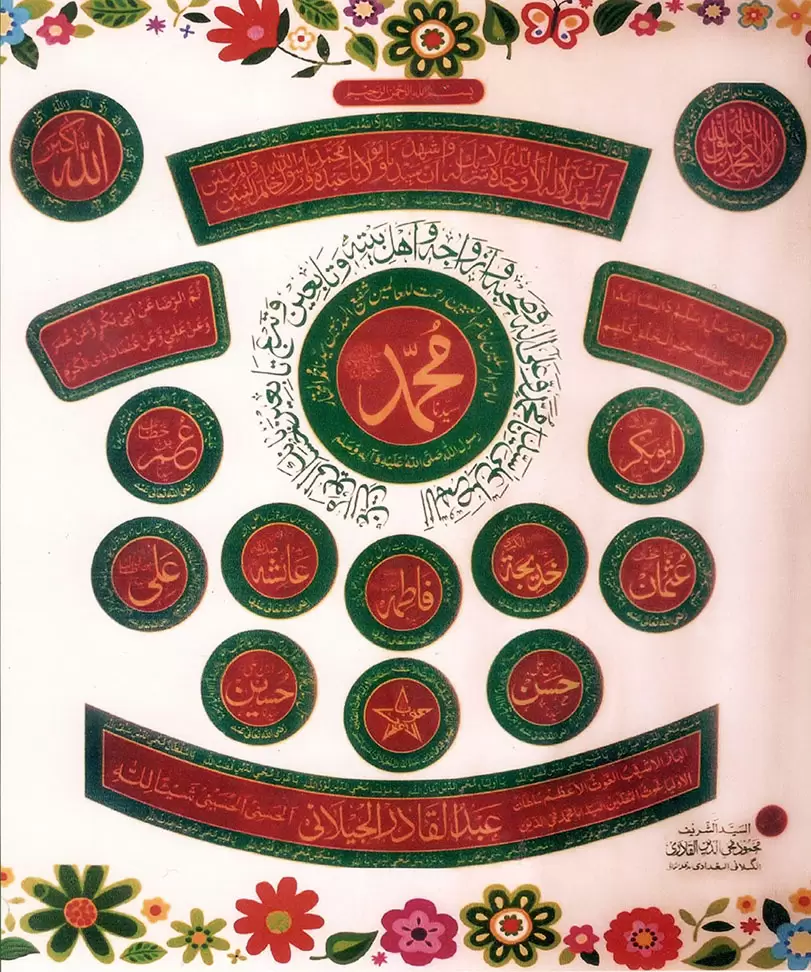
Syed Abdul Qadir Jilani (رحمتہ اللہ علیہ) (The Sultan of Saints)
Introduction
Syed Abdul Qadir Jilani (رحمتہ اللہ علیہ), also known as Ghaus-ul-Azam (The Supreme Helper) and Muhiyuddin (Reviver of the Faith), is one of the most celebrated and influential Sufi saints in Islamic history. A true embodiment of piety, wisdom, and divine love, he played a pivotal role in reviving Islamic spirituality and guiding seekers toward righteousness.
Through his profound knowledge of Islam, deep spiritual insight, and miraculous abilities, he established the Qadiriyyah Sufi Order (Silsilah-e-Qadiriyyah), which remains one of the most influential Sufi orders in the world today. His teachings continue to enlighten hearts and strengthen the faith of believers even centuries after his passing.
Lineage and Ancestry
Syed Abdul Qadir Jilani (رحمتہ اللہ علیہ) belonged to the Ahlul Bayt (the noble family of Prophet Muhammad ﷺ). He was a Hasani-Husayni Sayyid, meaning his lineage traces back to both Hazrat Imam Hasan (رضی اللہ عنہ) and Hazrat Imam Husain (رضی اللہ عنہ) through his parents.
-
Father: Syed Abu Salih Musa Jangi Dost (رحمتہ اللہ علیہ) – A saintly man known for his righteousness.
-
Mother: Syeda Ummul Khair Fatima (رحمتہ اللہ علیہا) – A noblewoman renowned for her piety and spiritual wisdom.
His lineage is considered sacred, and it played a vital role in shaping his spiritual journey, as he inherited the love of Allah and His Messenger ﷺ through his family.
Early Life and Childhood
Syedina Ghous-ul-Azam is not only known as the greatest of all helpers, but was also a great preacher, a great educationalist, a great moralist and a great doctor of Muslim law. He was the glory of the learned and the light of Islam; the Spokesman of theologians, the Interpreter of men of spiritual knowledge, the unique Leader of Leaders; the Leader of nations; the Chief of the chiefs; the Succourer of men and the Jinn; the Reviver of Religion; possessed of very high and perfect spiritual knowledge; and hailed as the Honour of Religion.
In Persia, in a place called Naif in the district of Jilan, in the South of the Caspian Sea, there lived a pious and God fearing man. He was Hazrat Abu Saleh Jangi Dost. He used to spend most of his time in the contemplation and love of Allah (God).
Once he was sitting on the bank of a river in deep contemplation, when upon opening of his eyes, he saw an apple floating down the river. The apple, which reached him near the bank, was taken up and eaten by him. Soon after, his conscince questioned the propriety whether the apple eaten by him was lawful. He got up and walked along the bank of the river towards the sides from where the apple had come, in order to find out the owner of the garden where from the apple had fallen into the river. Hazrat intended to pay him the price for the apple in order to make the energy derived from that apple lawful, since he had eaten it, without his permission.
After a long journey, he reached a spot where appeared a large garden on the bank of the river, which convinced him that the apple eaten by him had fallen from that garden. Upon inquiry he learnt that the garden belonged to Hazrat Abdullah Sawmai. Hazrat Abu Saleh approached him and begged his pardon for eating the apple of his garden without his prior permission. Such approach made Hazrat Abdullah Sawmai to perceive that Hazrat Abu Saleh was a pious and a noble man. He therefore, asked him to pay the price of the apple before his request for pardon was considered. The price was to serve under him as long as he desired. Hazrat Abu Saleh agreed to serve Hazrat Abdullah Sawmai for as long a period as his service was considered necessary.
After a few years service, Hazrat Abu Saleh asked the owner of the garden to grant him pardon and release him. Hazrat Abdullah Sawmai, before pardoning and allowing him to leave, asked Hazrat Abu Saleh to agree to marry his daughter who, he was told, was blind, deaf, lame and paralytic of hands. After marriage he was also to stay with them until a child was born to them. These were the qualifying conditions of his release.
In order to obtain his pardon, Hazrat Abu Saleh Jangi Dost agreed to the proposal and the marriage was accordingly fixed up. When he entered the chamber of the bride, he saw instead a beautiful and healthy lady. He turned his eyes from he assuming that he had entered a wrong chamber because the lady before him did not tally with the description given to him.
By his Kashf (Clairvoyance) Hazrat Abdullah Sawmai understood the predicament of Hazrat Abu Saleh about his bride. He called him and explained to him that he had stated that his daughter was blind, because her eyes never fell upon any outsider other than members of their family; she was said to be deaf, because she had never heard untruthful statements; she was supposedly lame, because she never undertook and stepped on towards committing acts, alien to the laws of Islam.
Such a description of his wife enlightened Hazrat Abu Saleh with a new light and he began to live happily with his wife whose name was Umul Khair Fatima. She was the pious daughter of Hazrat Abdullah Sawmai, who was himself a great Sufi and Saint of his time and was a direct descendent of Hazrat Sayidina Imam Hussain (R.A)
In this Saiyed family of Saints, Hazrat Umul Khair Fatima gave birth to a son in 470 Hijri during the month of Rabi-ul-Akhir. The child was named Abu Muhammad Abdul Qadir. Abu Muhammad was his Kuniet that is the name by which he was familiarly called by relatives and neighbours.
Some of the Saints of the time of foresaw the birth of his Imam-ul-Auliya Saiyidina Abdul Qadir Jilani. Hazrat Abu Bakar Bin Hawara once told some of his disciples that in the near future a great Wali (Saint) would be born in Ajam a non-Arab country who would be God fearing and highly respected by the people of his time and thereafter. His foot will be on the neck of all Walis (Saints) and Walis of his time would testify to the truth of his claim. Another Saint, Hazrat Ahmed Abdullah Bin Ahmed stated about 468 AH, that shortly a child would be born in Ajam whose miracles would be numerous and whose rank among Walis (Saints) would be very high.
From the above details, it will appear that Saiyidina Abdul Qadir Jilani was a direct descendent of Hazrat Imam Hassan Ilaihe-salam (R.A) on his father’s side. From his mother’s side he descended from Saiyidina Imam Zainul Abedin Ilaihe-salam son of Hazrat Imam Hussain Ilaihe-salam. He was therefore both a Hassani and Hussaini Saiyed tracing his lineage thereby to the two grandsons of Nabi Muhammad Mustafa (Sallalahu Alaihi Wa Sallam).
All the writers agree that the age of Hazrat’s mother was much above the normal age of child bearing, when this great Saint of Jilan was born to her. Despite having taken birth in such an advanced age of his mother, he was nevertheless, possessed of all the good faculties normally expected of a healthy child. The child was a born Wali (Saint). From the very birth, he was endowed with germs of Psychic powers. His Wilayat was obviously felt from his infancy.
His first Karamat was witnessed, when as an infant child during the month of Ramzan, he would take his mother’s milk only at night and not during daytime. This fact has been proved on the evidence of his mother. Once the new moon of the month of fasting was not visible in the evening on account of clouds. In the morning people came to his mother to inquire whether the day was the first of Ramzan. She replied that her child did not take her milk during daytime, which indicated that the day was the first of Ramzan.
As a child, Saiyidina Hazrat Abdul Qadir would not play with other children. The Psychic powers, which were exhibited by him in his infancy, naturally developed as he grew up, and were visible in all the stages of his holy life. Once the children of the vicinity, where Saiyidina Abdul Qadir with his mother was living, invited him to play. He led the game and asked all the children to say IL-LAL-LAH, when he would recite LA-ILAHA. This play of the children reciting LA-ILAHA-ILLALLAH (There is no God but God) could very well show the inclination and pursuits of the Leader.
He was quiet and sober from his early childhood and was generally disposed towards contemplation. His mother and his maternal grandfather, who themselves were, Walis (aulia karaam) naturally gave him the training that was necessary for a Wali. It may be said, that he was brought up in the cradle of Sufism. Whenever he thought of playing, he will hear a voice questioning him where he was going. At this, he would be frightened and would run back to take shelter in his mother’s lap.
At the age of ten, however, he attended school. The teacher would ask his fellow students to make room for the Wali of Allah to sit in the class. He lived in Jilan up to the age of 18 years. In one day Hazrat would learn by heart as much of his lessons as others would take a week to master. One day, he was going to the fields for an excursion. A plough bullock was ahead of him. The animal suddenly turned round and seemed to tell him that he was not born for the purpose of utilising his time on excursions. Frightened at this incident, he turned back to his house and climbed its roof. With his spiritual vision, he saw vast assembly standing on Jabl-ul Arafat.
He then requested his mother to dedicate him to ALLAH (GOD) and also allows him to proceed to Baghdad, which was then famous in the Muslim World as a great seat of learning for the acquisition of knowledge. The desire to acquire knowledge was intensely burning in the Hazrat’s heart and he overcame the love his mother, his hearth and home, for the sake of ALLAH. He was not deterred by the prospect of hardships of a long and dangerous journey, and residence in a remote city without friends or relatives.
When his mother heard the proposal, she shed silent tears as she perceived that on account of her old age, she was not destined to see her dear son again, whom she had brought up so carefully and tenderly, after the death of her husband long age. But the Saintly Lady would not stand in the way of his devotion of ALLAH.
She sewed forth dinars (Gold Coins) into his garment, so that they might not easily be lost. It was his half share of the money left by his father. The other half was kept for his brother. He soon joined a small caravan, which was going to Baghdad.
From the time of his childhood, he had never uttered falsehood, but despite this trait of his character, his mother at the time of parting, took a vow from him that he should not tell even one lie under any circumstances. They then parted with heavy hearts. The separation between the son and the mother was pathetic and sublime. It was no less similar to that of the leading of Hazrat Ismail by his father, Saiyidina Hazrat Ibrahim for sacrifice under divine orders, as the separation in either case was not for wealth, rank or fame, but for the sake of ALLAH.
The caravan passed quite safely as far as Hamadan, but beyond that place, a gang of sixty robbers fell upon the caravan and plundered it, but none laid violent hands upon Hazrat, taking him to be a penniless, religious youth. One robber however, questioned him whether he had anything with him. He readily said he had forty dinars sewed into his garment. The man took it as a joke and went away. Another robber also asked the same question from Hazrat, and on receiving the same reply, moved off. They reported the incident to the leader of the gang, who ordered the production of they youth before him. Accordingly, when he was taken before the gang leader, he said the same thing, which he had stated before. The garment was then cut open and the forty dinars were found.
On seeing the “dinars” the leader was astounded and asked Hazrat what had made him to tell the truth when he knew that he too would be robbed. He replied that he had promised his mother not to tell a lie under any circumstances. Hazrat added that if he had told a lie on the very first stage of his journey undertaken for the sake of acquiring knowledge of religion, he would obviously have no chance of acquiring any real knowledge of religion at subsequent stages of his career. Upon this, the robber realizing the felonous life he and his companions lad led, burst into tears and said that he had been breaking the commands of God throughout his life, while a youth was so conscientiously fulfilling his vow made to his mother.
By placing his hands upon the hands of Hazrat, the leader of the robbers solemnly vowed to give up robbery. The other robbers also followed their leader and repented. The robbed belongings were returned to their owners. The conversion of the gang of robbers was not only due to Hazrat’s strict adherence to truth but to his psychic powers also. Most of the authorities are of the opinion that this incident showed the greatness of Syedina, in the making. Had his nature not been truthful in origin, such a courageous and unwavering stand for truth, even in the face of such heavy odds, would not have been possible for him.
Seeking Knowledge in Baghdad
In Baghdad, Hazrat studied several subjects, under many famous Savants of Islam. He studied Fiqah under Qazi Abu Saeed Mubarak bin Mokarrimi, Abu Ofa Ali Bin Aqil and very many other learned teachers. He learned Hadith and his teachers included the famous Abu Ghalib Ahmed and Abu Qasim Ali. He acquired proficiency in Arabic literature under the learned Abu Zakaria Yahya Tabrizi, who was at that time the principal of Madrasa Nizami. During his stay in Baghdad, he established, by his conduct, that he was truthful and extremely charitable. During his stay, although he had to endure great hardships, by dint of the natural talents and devotion, he very soon became the Master of Quran, Fiqh, Hadith and Arabic literature, with all its connected branches.
He was once teaching Quran and a verse was erad. Several interpretations of the verse citing previous interpretations were quoted. In addition to these interpretations, so many other aspects and meanings of the verse were explained in detail, that Sheikh Jamal-din bin Jowzi, who was amongst the audience and was himself a renowned author of his time, admitted to a companion of his, that he knew of only eleven out of the forty different explanations of the verse given by Hazrat Ghosul Azam.
In 521 Hijri, Hazrat Abu Saeed Mubarik Bin Mokarrimi made over his Madrasa to Saiydina Abdul Qadir, In the beginning, there were only very few students; but soon his fame for learning, piety, inner illumination, veracity, and strict adherence to Shariat spread far and wide and people from all over the world began to flock round him to reap the benefits of his lectures and sermons. Gradually the existing building proved too small for the ever-increasing students, and in 528 AH, adjacent houses had to be acquired. For thirty-three years between 528 and 561, he devoted himself to the cause of Education. He himself taught Muslim Law, commentaries on the Quran, Hadith, Syntax (grammar) and other Islamic subjects. Students from every part of Iraq and all over the Muslim world came to his Madrasa, where they received free education with boarding and lodging provided.
After completing their course of studies, these students either returned to their own countries or went to some other lands in order to spread the knowledge and virtues acquired from the Hazrat. Education thus spread throughout Iraq and other Muslim Countries to achieve Saiyidina’s sole object of the revival of Islam. Most of his students later became famous Saints and Savants of Islam. Among them were Sheikh Ali bin Hiti-a- Qutub of his time ‘ Sheikh Baqir bin Batu, the head of the Autad, Sheikh Shahabuddin Umar Suharwardy the author of the well known book on Sufism, ‘Awarif-ul-Maarif’ and Head of the Suharwardy Order, Sheikh Abdul Hassan the famous preacher of Egypt and very many others.
As a student, when he was engaged in his studies he did not neglect his efforts to attain spiritual perfection. He therefore, often resorted to fasting and would not ask for food from any one, even if he had to go without any meal for days together.
Spiritual Struggles and Seclusion
For twenty-five years, he lived in the deserts and jungles of Iraq, completely detached from worldly desires. He endured extreme hardships, hunger, and self-discipline, seeking closeness to Allah through constant dhikr (remembrance of Allah), fasting, and deep contemplation.
This period of seclusion was crucial in shaping his spiritual strength and divine wisdom. Allah (سُبْحَانَهُ وَتَعَالَى) blessed him with a deep understanding of the unseen realities, making him one of the greatest spiritual guides of all time.
Spiritual Advancement
He sought the company of holy men and was intimate with them. After completion of his studies, he became more severe on his ownself. He began to deny himself the many cravings of life, except the barest minimum merely to sustain life.
When his devotion towards “Mujahida” increased, he left Baghdad and went to a place called Sauster. Hazrat has said ‘Do not expect to be included in the company of spiritual people, unless you have become an enemy of your whole-self and have become absolutely separated from all the organs of your body and all your limbs, and have cut off all connections with your existence, your movements, your speaking your hearing and seeing, with your efforts and your intelligence, and with every thing that proceeds from you, before your spiritual existence come into bring in you’.
He explained “All that will be found in you, after spiritual existence is breathed into you, because all these things constitute a screen between you and your Lord. You should consider your whole being and your parts as idols together with the rest of the creation and you should not obey any of them. Then you will learn the secrets of divine knowledge and acquire extraordinary powers”.
“Then you will truly become a manifestation of the powers of God; you will hear, see, speak, and understand through God, and will have comfort and rest through Him. Thus you will be blind and deaf to any thing besides Allah, so that you will not find anything existing besides Him”.
For one year, he lived mainly on vegetables. In the next year, he mainly lived on liquid. In the third year, he barely ate drank or slept. Gravings were thus brought to the very minimum. This ‘Mujahida’ was undertaken to assume the attributes of Allah, who neither eats nor drinks nor sleeps. Hazrat wandered in the jungles of Iraq in a state that neither he knew anything about the people nor anybody knew anything about him. People thus took him for a dumb and insane person. He lived for many years in the ruins of Madain in Jazab. He moved about alone for about twenty-five years amidst the ruins of Iraq.
Thought insane and taken for treatment, his condition would worsen and outwardly to those around him he would appear to be dead. When the people prepared to wash his body prior to burial, he would suddenly regain consciousness and movements. Such was his physical state.
For about forty years he performed morning prayers with the ablution (wuzoo) taken for the previous night prayers. After night prayers, he would stand holding a post to avoid sleep and recite the Quran till the time for morning prayers. Hazrat Sheikh said, ‘whoever preferred sleep to wakeful prayers at night would lose alertness, towards approach to Allah, who nor his angels needed sleep. Thus merit lies in keeping awake for prayers at night, denying slumber’.
For eleven years he lived in a tower, which on account of his long stay, was known as Burje-Ajami. Once in this tower he vowed to God that he would not eat nor drink unless food was put into his mouth. He began to fast. After completion of forty days of fast, some one came and kept near him some food. Since it was not put into his mouth, he did not eat it, although the animal desire in him was eager to devour it. He spiritually heard loud cries of “Hunger”. “Hunger” at this time Hazrat Abu Said Mokkarimi happened to pass by the place and inquired what the matter was. Hazrat Sheikh replied that his ‘nafs’ was greedy but his soul was serene in the contemplation of God. Hazrat Abu Said asked him to join him in Baghdad. But Hazrat Sheikh did not leave for Baghdad until Hazrat Khizer had gone and requested him to go to Hazrat Abu Said who was waiting for him. He then left and upon reaching there, was fed by Hazrat Abu Said. Hazrat Sheikh Abdul Qadir took a ‘khirqa’ from Hazrat Abu Said and the latter also requested Saiyidena Abdul Qadir to put a “khirqa” on him.
Satan disturbed the Hazrat but with the grace of Allah he resisted. Once he was in a jungle without food or water being available. After a few days, Hazrat felt extremely thirsty. Then a cloud appeared over his head and burst into rain and the Sheikh quenched his thirst with it. A luminous figure appeared on the horizon and said, ‘I am your God. I now make all unlawful things, lawful to you.’ At this the Sheikh recited the words ‘I seek the protection of God from Satan the accursed.’ On hearing this, the figure changed into a cloud and it was heard saying, ‘By your knowledge and by the grace of God you have been saved from my deception.’ Then Satan asked the Sheikh how he had recognized him so quickly. The Sheikh replied that his announcement of making unlawful things lawful betrayed him, because such an announcement could not have been from God.
There is also another version that one day, Satan appeared before him introducing himself as angel Jebreel and with him appeared to be ‘Buraq’ which was associated with the spiritual ascension (Mihraj) of the Holy Prophet and inviting the Hazrat to make a similar ascension and said that he had brought ‘Buraq’ from Allah. To this he promptly replied that the speaker could be none other than Satan himself, because neither Hazrat Jibreel nor ‘Buraq’ could come on to the world for any person other than the Holy Prophet Muhammed (peace be upon him). Satan however was provoked to say ‘Well Abdul Qadir, you have saved yourself by dint of your knowledge’ ‘Be off Satan.’ The Sheikh retorted ‘do not tempt me any further, it is not through my knowledge but through the Grace of Allah, that I have escaped from your trap.’
Teachings and Spiritual Legacy
The teachings of Syed Abdul Qadir Jilani (رحمتہ اللہ علیہ) revolved around purification of the soul, sincerity in worship, and absolute reliance on Allah. His messages continue to inspire generations and remain foundational principles of the Qadiriyyah Sufi Order.
1️⃣ Tawheed (Oneness of Allah)
He emphasized absolute trust in Allah, teaching that true spiritual success comes from complete submission to the divine will. He often reminded his followers that everything in existence is under Allah’s command, and nothing happens without His decree.
2️⃣ Love and Respect for Prophet Muhammad ﷺ
He held deep reverence for the Prophet Muhammad ﷺ, emphasizing that true success lies in following the Sunnah (way of the Prophet ﷺ). His love for the Prophet ﷺ was reflected in his teachings, poetry, and daily life.
3️⃣ Purification of the Heart (Tazkiyah al-Nafs)
He taught that a pure heart is the key to attaining Allah’s closeness. He encouraged:
✅ Sincerity (Ikhlas) in worship.
✅ Humility (Tawadhu) in dealings with others.
✅ Repentance (Tawbah) as a constant practice.
4️⃣ Service to Humanity (Khidmat-e-Khalq)
Syed Abdul Qadir Jilani (رحمتہ اللہ علیہ) was known for his compassion and generosity. He taught that a true believer must serve others selflessly. His Qadiriyyah Sufi Order is built upon the principle of helping the needy, feeding the hungry, and caring for orphans.
5️⃣ Abstaining from Materialism
Despite his widespread recognition, he lived a life of simplicity. He taught that wealth and status hold no value in the eyes of Allah and that spiritual richness is far superior to material possessions.
Miracles (Karamat) of Ghaus-ul-Azam (RA)
Allah (سُبْحَانَهُ وَتَعَالَى) granted Syed Abdul Qadir Jilani (رحمتہ اللہ علیہ) numerous miraculous abilities (Karamat), witnessed by countless people:
-
Reviving the dead by Allah’s command
-
Walking on water while in deep worship
-
Knowing the inner thoughts of his followers and guiding them accordingly
-
Providing food miraculously to those in need
The Walis of Allah, acting on behalf and under the stamp of the Holy Prophet (peace be upon him) and not proclaiming their existence and position’ until commanded by Allah serve humanity, by their preccipts and examples and pray incessantly for the general forgiveness of human sins.
The idea regarding the existence of such Walis and their approach towards some form of intercession for humanity is borne out by Verses 20-27 of Sura Yasin, a perusal of which will show that even among a nation doomed to destruction for its inequities, there live persons who testify to the truth of a Prophet appearing among them by their powers of reality, recognising the will of Allah. The event is begun with the following words, “And from the remote part of the country there came a man running who said, O’ my people follow this messenger, “The story of the prophet Loot as given in Sura Hud, gives an indication to the effect that punishment for the sin of a nation is averted by the presence of an eminent man of spritually.
The defernment of such punishment is out of deference to a spiritual personality living in its midst.
The punishment of Quraish was deferred till the migration of the Holy prophet from Mecca. Al-Quran lay? down this principle in so many words “Nor is Allah going to chastise them while you are among them” (8:33). The well known hadith ascribing to Allah the Words “One who is hostile to my Walli receives an announcement of War from Me” presents only the counterpart of this idea. Because if hostility to a Wali excites the wrath of Allah it follows that the attention and prayers of the Wali can induce the mercy of Allah. Of course the Wali spoken of are Walis of the eminence like that of Hazrat Ghousul Azam Abdul Qadir Mohiyuddin.
Miracles are abnormal and extra-ordinary acts that can only be performed by the privileged few like the Prophets and Walis of Allah. Perhaps such acts may sound illogical to the rationalist. But they do occur and are beyond ordinary comprehensive. The parting of the Red Sea for the Prophet Moosa and such like events are examples. Even in the life of ordinary mortals, miracles occur, by the mercy of Allah, to save them from catastrophes or accidents.
The miracles of Hazrat Ghousul Azam recorded are innumerable, when compared to other Saints. Of these innumerable, miracles, a few are given below.
After Hazrat Ghousul Azam settled down in Baghdad remarkable stories about his power circulated in Baghdad. The day to day increase in the circulation of such stories made a large number of great scholars of the town to decide to visit him, altogether in other to test his knowledge by posing one, hundred difficult questions. On their arrival, the Hazrat foretold them of their purpose and gave each question the correct answer, even profounding to them explanations beyond the limits of their comprehension on their own special subjects. This” thought reading was daily manifested by him. It was not necessary for the visitors who came with petitions of desires to tell him, for he looked straight at them and gave them the answers.
On one occasion; two weary and hungry travellers from Arabia joined his audience unobtrusively. The Hazrat immediately stopped his discourse saying “Poor travellers; they have just come a long way and have had practically nothing to eat.” He then described correctly their last meal to the astonishment of all concerned.
One of the most remarkable things we hear from this Saint’s life is that even a man’s destiny could be deflected from conscious life into the dream state. A merchant of Baghdad one day approached Sheikh Hammad Al-Dabbas for his blessings before taking a caravan to Syria. Sheikh Hammad forbade him to undertake the proposed journey because he foresay that the merchant was likely to be robbed and murdered by highway men. The merchant very much depressed, met Hazrat Ghousul Azam on the way and informed him what the Sheikh had told him. The Hazrat promised the merchant his personal responsibility for his safe journey and asked the merchant to proceed. He reached his destination safely with his goods.
On his journey the merchant forgot to take back his money kept in the place where he had performed his ‘ablution. On going to bed he was murdered. On waking he saw blood round his neck and also felt the pain of the blow. However, he realised that what he had seen was a mere dream, but remembering his lost purse, he went back to the place and recovered it.
While he was returning to Baghdad he was confused in his mind to decide whether seeing Sheikh Hammad first would be proper, as he was the senior Sheikh or seeing Hazrat Ghous first was appropriate as it was his predictions had proved true. He suddenly saw Sheikh Hammad. He asked him instead to first go to Hazrat Ghousul Azam by whose prayers his predistened murder had been changed into a dream and the loss of property the purse changed into forgetfulness.
One of Hazrat’s own servants, who visited his master complained that he had, in a dream slept with man women. Upon this, Hazrat said that it was the servant’s destiny to sleep with all those women but this misdeed had been transformed into a dream. Before the servant began to describe the event, Hazrat gave him a list of the names of all the women including those he knew and those he did not.
Khalifa AImustanjid Billah once came to Hazrat and presented him some bags of gold. He refused, the gift but when the Khalifa begged and pleaded for their acceptance the Hazrat took two bags and pressed them. Blood seemed to ooze out of them, which was indicative of the fact that the wealth had been amassed by oppressing people, which was represented by the blood seen.
On one occasion a Christian Clergyman came from Yeman and accepted Islam from him in an assembly where he had delivered a sermon. After his conversion, he voluntarily stood up and related to the assembly that he was a man of Yeman and had decided to accept Islam from the hands of the most eminent Muslim in Yeman. He reported that had seen Prophet Eesa in a dream who directed him to proceed to Baghdad and accept Islam from Hazrat Abdul Qadir, who was the most eminent at the time in the whole world.
Once three Faqihs, who came to see him offered their prayers under his Imamath (leadership). They did not like his reading of the Quran and formed a low opinion of him. They slept that night and went to the spring for a bath late at night. A Tiger clung to their clothes and cought hold of them. The Faqihs became afraid of their lives. The Hazrat at that moment came out of his closet. The Tiger quietened and crawled (it his feet. Hazrat sternly looked at the Tiger as if to question why it had interfered with his guests though they had formed low opinion of himself. The Faqihs came to him and repented for their conduct and begged his pardon. Hazrat then addressed his guests remarking that while he had been improving his heart, they had only been improving their tongue to speak ill of him and slander people.
Sheikh Shihabuddin Umar Suharwardy in his youth used to read voraciously books on scholasticism, inspite of the advice of his uncle to the contrary. Once his uncle took him to Hazrat Ghousul Azam and informed him that the boy was devoting all his time to scholasticism. Upon this Hazrat asked Sheikh Shihabuddin what books he had read on the subject. On getting a reply, he placed his palm on the chest of Sheikh Shihabuddin. No sooner was the plam removed; he surprisingly forgot all he knew of scholasticism. But in lieu of it, he felt his mind replaced by the knowledge of Allah. Sheikh Shihabuddin Umar Suharwardy ultimately became the Imam of the Suharwardy Order and is the author of the famous book on Sufism named “Awariful Maarif.”
Sheikh Muzzafar bin Mansur said that in his youth he saw the Hazrat in the company of a large number of persons. When he sat down with a book on spiritual philosophy, Hazrat without seeing the book but questioning him said that the book was not a good one for him and should be discarded. However, be did not like to discard it owing to his love for the book, but at the same time he neither desired to incur the displeasure of Hazrat also by retaining that book. So he decided to keep it somewhere else and tried to get up to do so. But he could not. He felt as if he was planted to the ground.
Hazrat then asked him to show the book to him. It was given. Hazrat passed his hand over it and said that the book was Ibuzari’s “Fazil-ul-Quran” and then returned it to him. I opened it and saw that it was “Fazil-ul-Quran” but without the chapter on spiritual subject and philosophy “contained therein earlier. Hazrat asked him to repent for what had passed through his mind He first repented and then got up, but found that he could not thereafter remember a single portion of that book.
A relative of the Khalifa was once taken to Hazrat. The man was suffering from dropsy and had an enormously swollen stomach. He sought relief. Hazrat passed his hands over his stomach, upon which it contracted to its normal size.
Hazrat Ghousul Azam had spiritual powers to hasten to the rescue of those who called him in an hour of emergency or adversity even from afar, such as the hearing of a thundering shout that rang, to frighten away marauders who tried to molest and loot owners of a caravan in the desert of Samarakand, who, in their hour of peril, called and appealed for the aid of the Hazrat.
Sheikh Shihabuddin Suharwardy’s parents were for long childless, until his mother approached him and begged of him to pray to that she may be blessed with a son. Raising His hands in supplication he prayed and said that Allah the Beneficient would grant her wish. He desired the child when born to be named Shihabuddin and predicted that the child would rise up to be a Sheikh of Sheikhs. In the course of time she bore a son though she was above the normal age of child bearing.
His powers over the souls of this disciples extended beyond the grave. One day in Baghdad a man informed him that his deceased father in a dream had desired him to appeal to him to pray for (he redemption of his dead father’s soul, as he was suffering. Hazrat asked the visitor “Did your father ever visited my Madrassa?” Yes he answered. Hazrat remained silent for a while and referred no further on the matter. A few days latter, the man returned to Hazrat saying that his father appeared to him in a dream wearing a green robe and had told him that his punishment has been lifted due to Hazrat Ghousul Azam’s prayers.
Abdullah Zayyat once said that one night Hazrat came out of his closet with a walking stick in his hand. Abdullah within himself at that moment wished to see Hazrat performing some miraculous act. No sooner this thought had occured to him, the Hazrat set up his stick on ground and it became luminous and began to glow. Soon it became so bright that it illuminated the entire house. He then took up his stick, and looked at Abdullah and remarked you desired this sort of act. Abdullah was amazed.
A mother brought his son to the Sheikh to become a murid (follower) A few months later she returned and saw him looking under nourished. She complained that Hazrat was himself partaking the delicious dish of chicken daily whereas his poor son had been made to keep up on dry bread. Hazrat on this complaint picked up the bone of a chicken, by this bone suddenly transformed into a live cock, which crowed as if to testify that there is no Allah but Allah. Mohammad is His Prophet “and Sheikh Abdul Qadir is His Wali”. Addressing the terrified woman he commented “when your son is able to do this, then there will be no reason why he should not eat the same as I do.”
He once asked nearly three hundred residents of a dewelling place to vacate it immediately. No. sooner these people vacated, (he building fell to the ground. He had forseen the occurence and warned them in time.
Sheikh Alt Arabi of Spain had no children. At the instance of a Mujzub (a mon of distracted mind owing to’ divine attraction) he approached Hazrat Ghousul Azam for his blessings and prayers for a son. Hazrat said I have one more son yet unborn in my destiny. I give it to you. Rub your back against mine and name him when born Mohammed Mohiyuddin. He would rise up to be a Qutub of his time. The child was eventually born and was named accordingly. He became a great philosopher and attained high spiritual advancement. He gained the title of Sheikh Akbar and is commonly known as Ibn-al-Arabi.
During a famine in Baghdah, Abdul Abbas Ahmed, the servant of Hazrat complained to him of the need for funds and of food grains. Hazrat gave him a reasonable quantity of wheat and asked him to store the grain in a covered receptacle and never to weigh it, but to take out according to necessity, by opening out a small portion of the container. He used to draw grains in this way for an unusually large period. The wife of the servant of Hazrat at last felt very much curious about it and in order to satisfy herself opened the mouth of the container. She surprisingly found almost *he same quantity of grain as was kept in the beginning, still remaining and unexhausted.
Once the water in Tigris rose to an extra ordinary high level on account of an unprecedent flood. The inhabitants of Baghdad became frightened of the imminent danger. They came to Saiyidina Hazrat Ghousul Azam and solicited his help. There upon Hazrat went up to the river side and planting his stick on the river bank said “Remain with in this limit. The flood then began to recede slowly and came down to the Limit demarcated by him.
Once a resident of Baghdad approached Saiyidina Ghousul Azam and stated that his son has been getting fever for a year and a quarter, and could not shake it off by any means. Hazrat instructed him to speak into the ears of his son and say ‘0 fever leave my son and go to the village of H Allah.’ He acted accordingly, and the fever left his son at once.
It is related on the authority of Sheikh Adi Bin Musafir that once Hazrat Ghousul Azam was conversing with some persons assembled to hear his sermon when it began to rain. Hazrat looked upon the sky and solicited “I call together men for your (Allah’s) sake but you disperse them.” As soon as he had uttered this, the clouds disappeared and rain ceased in the precints of the Madrassa of Hazrat, though it was raining outside.
Sheikh Osman Sayrifini and Sheikh Abdul Haq Harimi stated “.We were present before Saiyidina Hazrat Ghousul Azam in his Madrassa on third Saffar 555 A.H., when Hazrat suddenly got up with his wooden sandles under his feet and performed ablution. He offered two Rakats of prayers and with a loud shout, threw one of the sandles into the air. It disappeared from our sight. With another shout, his Holiness threw the other sandle into the air, which also disappeared. None present dared questioning him on the incident.
But thirty days after this incident a caravan came to Baghdad from Ajam and said that they had brought some presents for Hazrat. Hazrat permitted the acceptance of the presents of valuable things but these the same pair of sandles which were thrown in the air by Hazrat. They related that on the third of Saffar when they were travelling, suddenly a gang attacked them and plundered their merchandise and murdered some of them in the caravan. The gang then entered the jungle to divide the booty. Then they had halted at the outskirts of the jungle and it struck them to solicit the help of Hazrat Ghousul Azam. Just at that time they had heard two loud shouts which reverberated throughout the jungle. They had mistaken the shouts as the aftermath of a scuffle between the gang that attacked us and a stronger gang of Arabs. We were terror stricken. Some members of the gang came to us and said that a calamity had befallen them and requested us to take back the plundered goods. We went to the place where the booty was lying divided and saw two of their leaders lying dead and the two sandles lying close by.
Sheikh Abdul Hassan commonly known as Ibn Astantana of Baghdad stated “When I used to live in the Madrassa of Saiyidina Ghousul Azam for the acquisition of learning, I generally keep awake, at night in order to serve the Hazrat, if and when required. One night in 553 A.H. Hazrat came out of his room, presuming he required water for ablution, I took it to him but his holiness did not take it. Instead, he proceeded towards the gate of the Madrassa. I quietly followed him. The gate automatically opened and when he passed on, it closed itself. He then went towards the gate of the city which also similarly opened and closed automatically. Shortly after this we reached a town, which I had not seen before. On reaching the town he went to a house which was similar to his own Ribat in appearance. There were six persons in the house, who saluted him. He proceeded further on and I, stood, by a pillar. I heard the groaning of a person in a low voice. After a few minutes, the groaning ceased and another person went to the place whence the groaning came and carried away a dead body on his shoulder. Shortly after this, another person bare headed and with long whiskers, came there.
The man sat down in front of Hazrat who made him recite the declaration of faith used in converting one to Islam. Hazrat then cut off his whiskers, put a cap on his head and named him Mohammad. He said that he had appointed him in place of the deceased. The persons residing in the house accepted the decision submissively. He then left the place and in a short time came to the gate of Baghdad, which opened and closed automatically as before. His holiness (hen entered his Madrasa. In the morning when I resumed taking lesson from Hazrat I prayed him to explain the incident of the previous night. Whereupon he said that the town I had seen was Nehawand a distant city in the outskirts of the empire under the Khalif of Baghdad. The six persons in the Ribat, were Abdul and Nujaba. The man ^ho died was one of shem. The man with long whiskers was a Christian of Constantinople who accepted Islam and was appointed by him to fill the place of the deceased. The man who carried away the corpse was Hazrat Khizar.
It seems desire able here to explain that according to the Sufis, there exists a sort of hierchy of Saints at all times in the world through whom Allah manifests His mercy to the world of humanity. In the absence of the Prophet, they are the vice gerents of Allah on earth on the Prophet’s behalf. They are of three different grades, Abdal is a plural of Badal meaning literally “substitute”, so called because should any one of these saints die, Allah immediately substitutes him by another (Sihah). They are righteous persons of whom the world is never destitute. But on more authoratative view is that they are given this name, because of their ever changing spiritual condition. They are inaflux; and are not allowed to remain in one state. Being on their way to Realisation, they are not allowed to settle down at any intermediate point. As to their exact number and their locations, opinion, is divided. They seem to be the lowest in rank amongst the spiritual successors of the Prophet, Ghousul Azam and Qutubs.
According to the best authorities they are a hirearchy of the saints of a particular generation and are supposed to be pre-eminently endowed with sanctity and faculties to even perform miracles. If anybody is a Qutub or a Ghouse, he is recognised as such only by his agents. Abdals, themselves reveal their position to a. particular person. The literal meaning of Qutub is axis or pivot, the point upon which a thing turns, the chief around whom the state of affairs turns. So a Qutub is he, whose attention and prayers decide the course of events in a particular society of people? He may be regarded as a kind of spiritual agent in a particular community.
The literal meaning of Ghouse is ‘AID’ or ‘Succour’ in the midst of difficulties. So Ghouse is a kind of intercessor, who intercedes at a moment when the sins of a nation or humanity are at the point of being punished. These great men appear to be particularly tender hearted like the Holy Prophet. Their hearts melt at the woes and sufferings of humanity and as such become a means to be able to avert Divine punishment. With the assurance of acceptability of their prayers, their prayers become a plea for Divine forgiveness and mercy. Hazrat Ghousul Azam has once said that the Almishty has given him the knowledge of all his murids up to the end of the world, and His Holiness has proclaimed that none of his murids would die without repentance, and attain the seventh degree to alude in paradise. Once he remarked that he would not have the presence of Allah unless He did not accompany him and his murids to enter paradise. His Holiness was once questioned as to the position of a devotee who has regard and love for him, but was not actually his murid nor wore Khirqa from him. He said that such a person was also his murid although the real process of his becoming a murid was not complete. Even a person who had love and reverence for him would not be disappointed by the graciousness of the Almighty.
Despite his miraculous abilities, he always humbly attributed everything to Allah’s will.
Writings and Books
Syed Abdul Qadir Jilani (رحمتہ اللہ علیہ) wrote several masterpieces on Islamic teachings and spirituality, including:
-
Al-Ghunya Li Talib Tariq al-Haqq – A complete guide on Islamic belief and Sufism.
-
Futuh al-Ghaib (Revelations of the Unseen) – A collection of spiritual discourses.
-
Sirr al-Asrar (The Secret of Secrets) – A deep exploration of Islamic mysticism.
These books continue to be widely studied and revered in Islamic spiritual circles.
Passing Away and Legacy
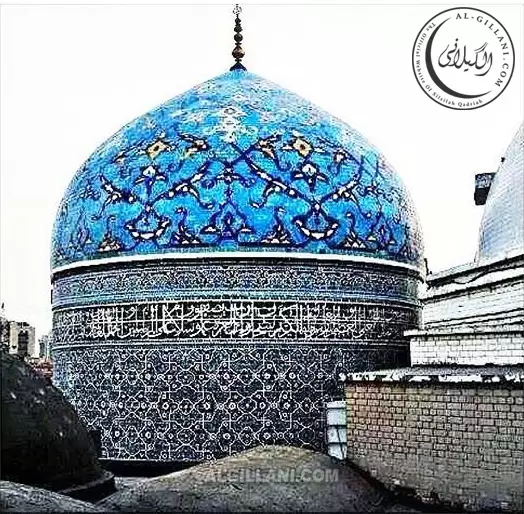
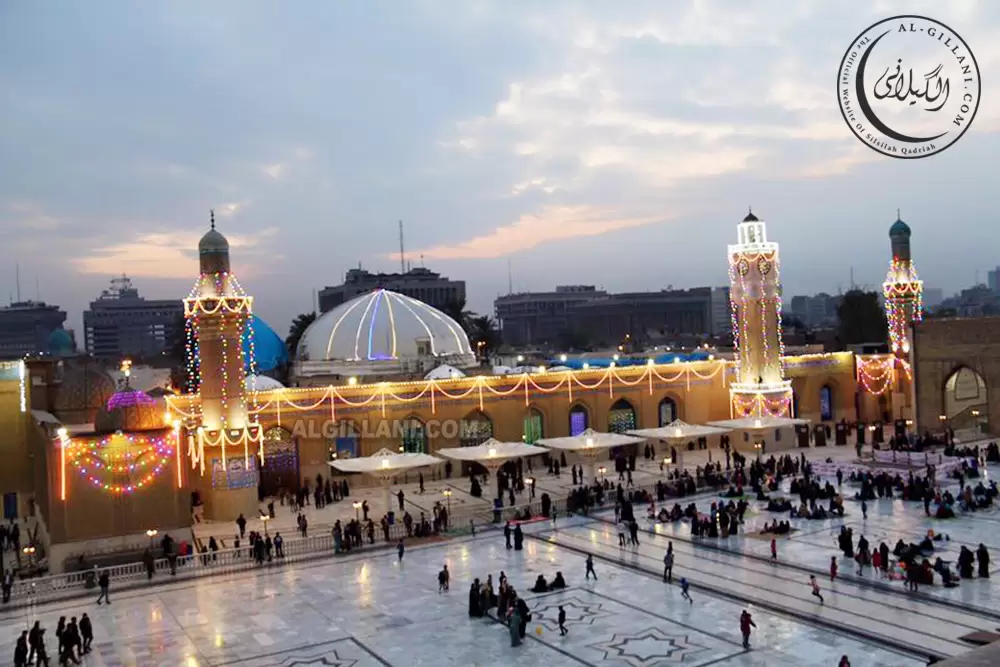
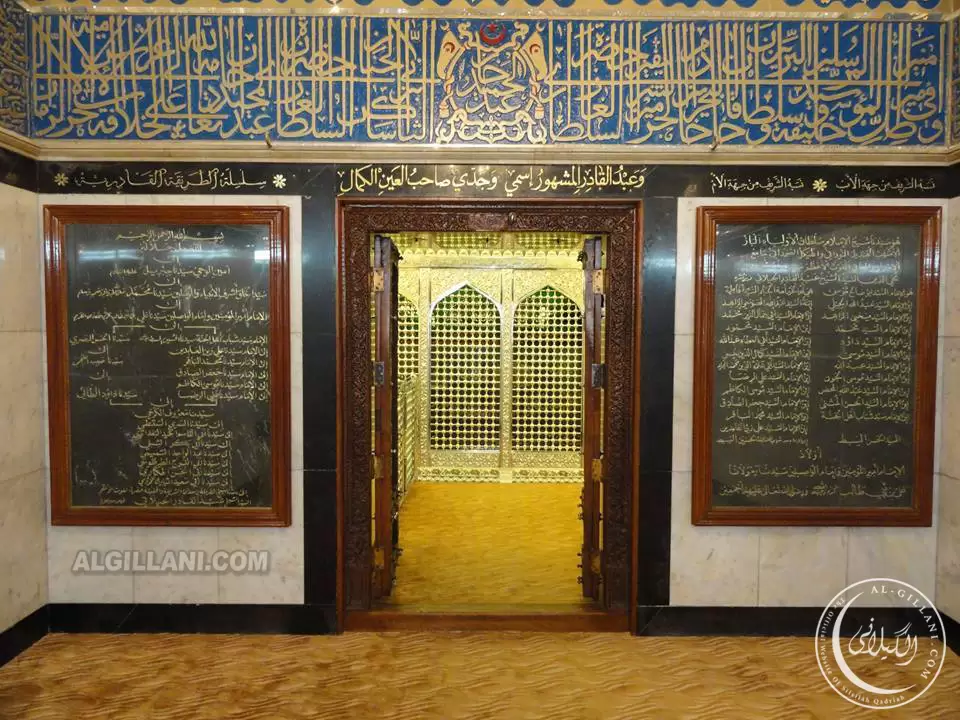
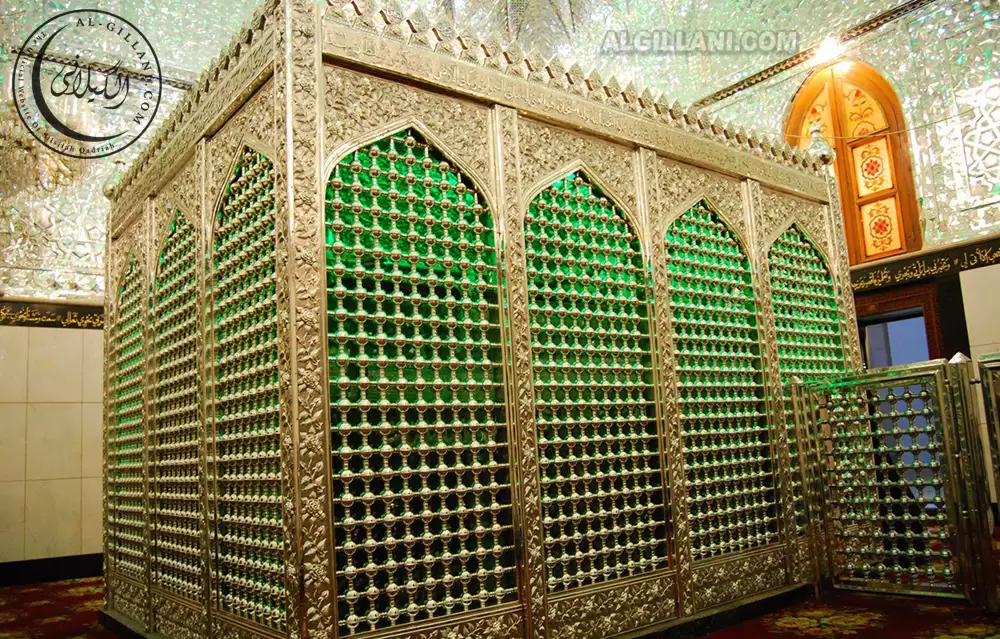
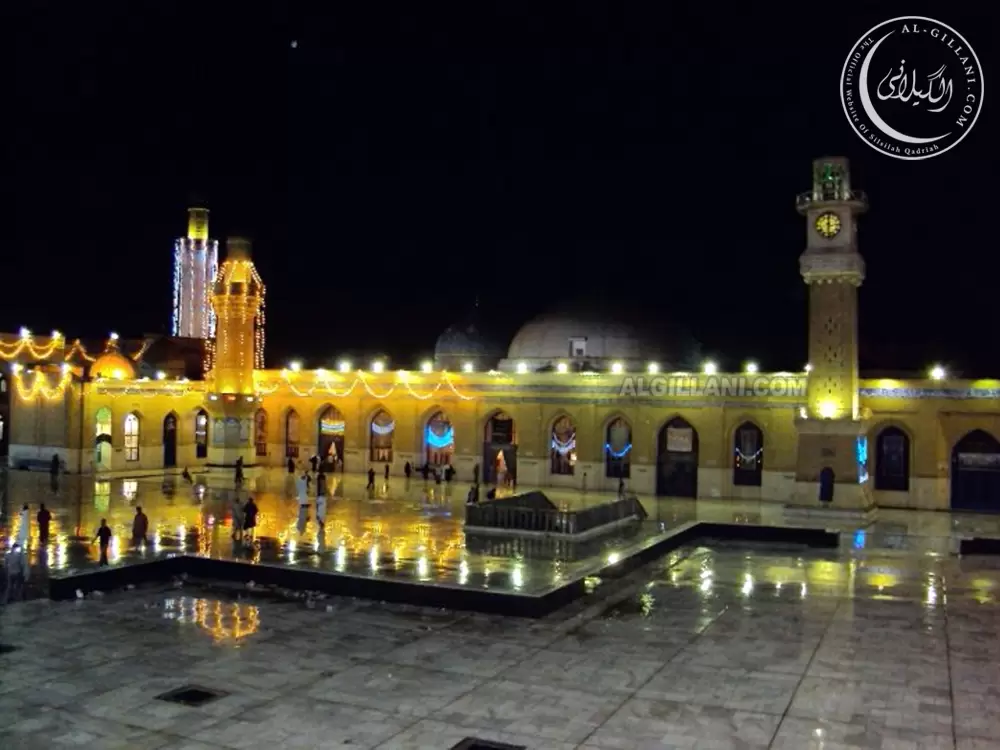
On 11th Rabi-ul-Thani 561 AH (1166 AD), Syed Abdul Qadir Jilani (رحمتہ اللہ علیہ) passed away in Baghdad. His shrine in Baghdad, Iraq, remains one of the most visited places by devotees seeking blessings.
His Qadiriyyah order continues to flourish worldwide, guiding people toward spiritual enlightenment, love of Allah, and self-purification.
Syed Abdul Qadir Jilani (رحمتہ اللہ علیہ) was not just a saint but a divine reformer who revived Islamic spirituality and led people back to Allah. His teachings remain timeless, offering guidance to those seeking truth and divine love.
Even today, his name is recited with reverence, and his spiritual influence continues to inspire millions around the world.
May Allah bless us with his wisdom and allow us to follow his path of righteousness. Ameen!
Public Life
The most attractive part of the life of a Wali is that which deals with his manners and customs as corresponding to those of the Holy Prophet and is in accord with ‘Sunnah’. Hazrat Sheikh-ul-Islam, from the very beginning was devoted towards divine love and was engaged also in the service of mankind. He spent practically his whole life in such service to making especially in the educational and spiritual spheres.
In early life as a student during a year of famine in Baghdad, one day he felt very hungry. But he did not have any money to buy food. He was obliged therefore, to proceed towards the bank of the river Tigris to pick up some vegetables to satisfy his hunger. When he found something edible, he did not run ahead of the other hungry persons, who were around him, to first take and have it for himself. Such was his exemplary conduct, even when starving.
Once having been unsuccessful in his attempt to find any food, he returned to Baghdad in an exhausted condition and entered a mosque to take rest. There he found a stranger eating something. The stranger invited him to join and share the food, but he declined though he was on the point of starvation.
he stranger however requested Hazrat again to share his meal for the sake of Allah. Then only, he joined him. In the course of conversation the stranger learnt that he was Abdul Qadir of his own town Jilan, and was perturbed. He confessed to Hazrat that his mother had given him eight dinars to be given to him, but as he could not locate him in Baghdad and as he had no food for the last two days, he had that day purchased the meal out of that fund under such extreme circumstances.
He apologized and placed before Hazrat the balance in hand. Hazrat not only pardoned him, but returned to him the balance tendered, thereby depicting his benevolence.
Once in Baghdad deprived of substantial food for 20 days, he proceeded to the ruins of Aewan-I-Kisra to see if he could find any vegetable or edible roots. He preferred such search to seeking help from anyone, under any circumstances. When he reached there, he found about seventy Walis already there in that same search for food. He returned to town and did not consider it proper to remain there and thereby reduce the quantity that may be found. Upon reaching back to the town, he met an unknown person from his native place. The stranger delivered him some pieces of gold and silver stating that those were sent by the mother of Hazrat Sheikh, to be delivered to him. He took them and immediately went back to the ruins of Kisra and distributed these pieces of gold and silver to those Walis, retaining one, with which he purchased food, which he shared with other needy persons. What a rare example of benevolence indeed.
His whole life was devoted towards the service of the poor and he devoted more of his precious time to the poor, than to the rich. Whenever in a town while passing through its streets, the people would come out of their shops and houses, and would stand on both sides of the streets to greet him in their reverence.
Once his son Sheikh Abdur Razak was with him on a journey to Hijaz when they reached a village where Hazrat Sheikh desired to stay. Instead of staying in the village, he proceeded towards the surburb, where he saw an isolated tent in which an old man, his wife and their daughter were residing. Hazrat Sheikh asked his permission to camp in vicinity.
Soon the news of the arrival of Hazrat reached the village and the notables and ‘Amirs’ of the village came to Hazrat and requested him to come to their village and stay with them, but he declined to accept their offer. When his Murids, devotees, students and people of the neighbouring villages heard this, they rushed to see him. They then gifted various presents. The Hazrat graciously accepted them but gave them to the old man near whose tent Hazrat had preferred to stay. Obviously this act was done to improve the financial position and social status of the old man and his poor family, who were until then disallowed from living in the village itself. The effect of this act obliged the people of the village to shift him to the village and to allow him to live among them.
Hazrat had a very soft corner for the needy and he would not rest until their needs were fulfilled. Even after his demise, any prayer for spiritual help from Hazrat seldom met with disappointment. He was very fond of feeding people along with him. His door was always open for all. He would personally look after the needs of his guests. After evening prayers, his tablecloth would be spread and his personal attendants would announce dinner for his guests, whatever was the food available.
Sometimes, people with a desire for a particular dish would come to Hazrat. Once on his return from Hijaz after Hajj the famous preacher of Egypt Sheikh Zainuddin in ‘Bhahjat-ul-Asrar’, has narrated that he and his other companion wished mentally to have honey and milk dishes respectively at dinner. Meals were brought and when these were being served the servant placed honey before my companion and the milk dish before me. One seeing this Hazrat pointed out to his attendant to reverse the dishes, that is, the place honey before me and the milk dish before my companion as were mentally desired by us. Hazrat Ghous once said, ‘I have explored the weight of every human action and have finally come to the conclusion that feeding of the poor and hungry is virtuous of all actions.’
He was always most polite and respectful to his visitors. Whenever, any one of them was absent for sometime, he would enquire particularly about him. In cases of indisposition he would visit the patients and pray for their health and happiness.
He disliked the company of ‘Amirs’ and rich men. Whenever the Khalifa or other ‘Amirs’ intended to come to Hazrat, he would get up from amongst those present and retire to his chambers. It has not been established by any writer so far that Hazrat Ghous had ever gone to see any Khalifa or Amir. On the contrary they used to come to Hazrat.
Khalifa Almustanjad Billah once came to him and presented him bags of gold. Hazrat Sheikh refused the gift. When the Khalifa begged and pleaded for the acceptance of the gift, Hazrat took two of the bags and pressed them. Blood seemed to ooze out of the bags of gold. He then addressed the Khalifa stating that his wealth had been amassed by oppressing the poor people.
Sometimes, people with a desire for a particular dish would come to Hazrat. Once on his return from Hijaz after Hajj the famous preacher of Egypt Sheikh Zainuddin in ‘Bhahjat-ul-Asrar’, has narrated that he and his other companion wished mentally to have honey and milk dishes respectively at dinner. Meals were brought and when these were being served the servant placed honey before my companion and the milk dish before me. One seeing this Hazrat pointed out to his attendant to reverse the dishes, that is, the place honey before me and the milk dish before my companion as were mentally desired by us. Hazrat Ghous once said, ‘I have explored the weight of every human action and have finally come to the conclusion that feeding of the poor and hungry is virtuous of all actions.’
He was always most polite and respectful to his visitors. Whenever, any one of them was absent for sometime, he would enquire particularly about him. In cases of indisposition he would visit the patients and pray for their health and happiness.
He disliked the company of ‘Amirs’ and rich men. Whenever the Khalifa or other ‘Amirs’ intended to come to Hazrat, he would get up from amongst those present and retire to his chambers. It has not been established by any writer so far that Hazrat Ghous had ever gone to see any Khalifa or Amir. On the contrary they used to come to Hazrat.
Khalifa Almustanjad Billah once came to him and presented him bags of gold. Hazrat Sheikh refused the gift. When the Khalifa begged and pleaded for the acceptance of the gift, Hazrat took two of the bags and pressed them. Blood seemed to ooze out of the bags of gold. He then addressed the Khalifa stating that his wealth had been amassed by oppressing the poor people.
In addition to the daily preaching, he would deliver specific lectures thrice a week. These sermons were delivered at the Idgah on Friday mornings, at the Madresa on Tuesday nights, and at the Guest House, on Wednesday mornings. All categories of people attended these sermons, and included Sufis, Faqihs, Amirs, Khalifas, Rijal-ul-Ghaibs, Jins, Angels, Souls of the departed ones. Even non-Muslims attended these sermons and many of them subsequently embraced Islam.
Sinners, who listened to his discourses, reformed their lives. His sermon alone helped in the reformation of over one lac of evil doers, which included murderers and thieves, who repented their past sins and started to lead better lives. Without any fear, he publicly denounced the unjust acts of Khalifa Muqtaza-ai-Ammarallah who once appointed the notorious tyrant and dishonest person Abu Ofa to the post of a Qazi. The Hazrat disapproved this appointment and said that the Khalifa had committed a grave error in making this appointment and that he would have to account for his action in the near future before Allah. When the Khalifa heard of this admonition, he trembled with fear and dismissed the tyrant Qazi.
Addressing a date tree, in the yard of his Ribat as if it represented the ruling Khalifa Muqtaza-ai-Amarallah, he said that he would cut off its head if it should be refractory. On hearing of this, the Khalifa asked his minister, Ibn Habira to submit to Hazrat Sheikh, in private, that it was not proper for His Holiness to oppose a Khalifa, when he knew well the rights of the Khalifa. When Ibn Habira went to the Hazrat, he saw many persons sitting round him; hence he awaited an opportunity to speak to him in private. In the course of conversation, Hazrat told him that he would certainly cut off his head. The minister understood he good intentions and sincerity of the Hazrat. Ultimately the Khalifa himself came to Saiyidena Ghousul Azam and sat down respectfully. He then lectured the Khalifa and reproached him so severely that he burst into tears. Then Hazrat Sheikh treated him with kindness. The censure had the desired effect on account of the psychic powers of Hazrat.
Once in 528 A. H., Abdul Hasan Saeed was present at a meeting when Hazrat Ghous was delivering a sermon on Zumud (Renunciation). He thought within himself that he would like to hear a sermon on Mahifiat (gnosis). Hazrat Ghous suddenly changed his subject and spoke on marfat of such a high character that he had never before heard.
He then mentally desired to hear a sermon on Shawq (intense desire) to please God. Hazrat again changed his subject and spoke on ‘Shawq’ (intense) desire. His sermon on the subject was so excellent that he did not hear the one like it before. In this manner Abdul Hasan Saeed mentally desired to hear discourse on different subjects, and Hazrat spoke on subjects like annihilation and subsistence, and lastly on ‘Hazuri’ (Presence of heart in God) and ‘Ghaibat’ (absence from all things except Allah). After he had spoken on the last subject, he told Sheikh Abdul Hasan Saeed that, that enough had been spoken for him. Abdul Hasan lost his control and tore his garments.
One day Hazrat Abdul Wahab, son of Hazrat Ghous, on his return to Baghdad, after extensive travelling and acquiring knowledge in different branches of Islamic theology, and having obtained the previous permission of his father, sat on the chair of his father and delivered a scholarly speech. The lecture did not move the audience. The heart of none appeared to be emotionally affected. Many in the audience, then requested Hazrat Ghous his father, to speak. At this Hazrat Abdul Wahab got down and Hazrat Ghousul Azam occupied the chair.
Hazrat merely spoke on his daily routine. But these few words made the whole audience attentive. His son inquired the reason for having been able to arrest so quickly the attention of the audience of quite a formal discourse. At this, Hazrat replied to his son that he was proud of his travels, though he had yet to travel on a higher plane. Hazrat said ‘when I ascended the chair, a spark from Providence flashed in my heart and I spoke in that state a few words, which naturally had such an affect on the audience’.
At first he began to preach in the Madresa made over to him by Hazrat Abu Saeed. In the beginning only two or three persons formed his audience. ; But on account of his profound learning, piety, spirituality, adherence to truth, strict observance of the ‘Shariat’, avoidance of ‘Bidat’ (innovations) and his eloquence, his fame spread through out the different quarters of Baghdad and all the Muslim world.
Crowds began to flock to hear his sermons. As there was not sufficient accommodation in the Madresa. People used to sit outside the Madresa on the road up to the entrance to the Serai. As the audience still increased the houses adjacent to the Madresa were acquired and the Madresa was extended in 528 A. H. Even then, the Madresa and its percents were not large enough for the audience. It was then in the Idgah outside the City, that Hazrat used to address mammoth audiences. Subsequently a monastery was built for this purpose, which was also known as Musafir Khana.
Parting Admonitions
Hazrat Ghousul Azam lived an extraordinary sternous and glorious life mainly engaged in service to mankind during day time and occupied at night in prayer in contemplation of Allah. It is beyond common comprehension to assess his nearness to Allah, which by sheer devotion and sacrifice he had attained. His examplary life was transparently glorious. Every lunar month, an angel in the guise of an Arab, used to wait upon him and inform him of the good and bad events that would take place in its course. In 560 A.H. in the month of Ramzan the said Arab bade him farewell thereby indicating that Hazrat would. not-survive to see the next Ramzan. In the beginning of Rabi-ul.Akhir of 561 A.H. he fell ill. The illness grew worse daily and it became evident that his end was drawing nearer.
His son Sheikh Abdul Wahab requested him to declare his parting admonition. He then said. It is incumbent on you to fear Allah and not to fear anyone else excepting Him and not to hope for anything from anyone else excepting Him. Entrust all your needs to Him and do not rely on anyone else excepting Him. Ask everything you need from Him and do not place your trust on anyone else, besides Him. He further said “when the heart becomes right with Allah, nothing is felt missing and nothing comes out of the man”.
During his illness he expressed “I am the core without the shell”. “Others have come to me so make room for them and show courtesy to them “Here is great mercy. Do not make the place con-gested for them”. He was also heard saying “upon you be peace and the mercy of Allah and His blessing May He protect me and you and turn with mercy to me and to you. I begin with the name of Allah unceasingly”. He kept on saying this one day one night. I do not fear anything or any angel, or even the angel of death. Addressing the angel of death, he said it is not you who has befriended me but one who has been bounteous to me.
During his illness his son Sheikh Abdul Aziz was with him and enquired often his pain and condition. Hazrat said, “Let not any one ask me about anything about my being turned over and over again in the knowledge of Allah”. Sheikh Abdul Aziz further asked him about his disease. To this, he “said, “Surely no one, be it a man, a Jin or an angel knows and understands my disease. The knowledge of Allah is not diminished by the command of Allah. The command changes but knowledge does not change. The Command may be abrogated but not so is, knowledge.T “Allah” causes things to pass away and establishes what Helpleases] and with Him is the basis for the book. The Quran says,” And He is not questioned what He does, and it is they who are questioned.
Once he said “I wanted death which has no life in it and a life which has no death in it”. So I enquired what kind of life and death he was alluding to the death that has no life in it, is the death of my own species. I do not see in it either benefit or harm. My death from my ownself, my own desire, my own purpose, and my own wishes in my worldly life and my life after death is all that I could see. I do not live in any of these nor am I bound in them. As for the life that has no death in it, it is my life with the act of my Lord assimilated in such a manner that I have no existence in it, and my death in it, is my existence with him.
There is no wali. Sheikh or Alim who has not proved the glory of Hazrat Ghousul Azam. Hazrat Sheikh Wali-Ullah has said that although Hazrat Ali was the first “Majzoob” among “Umat-Mohammadi” yet the only person after him who had accomplished the path of Jazb successfully was Saiyidina Abdul Qadir Jilani, who fully imbibed within himself the ways and attributes of the Holy Prophets. (Peace be upon him.)
Sheikh, Abdul Wahab was told by Sheikh Abdul Razzak and Sheikh Musa that Hazrat on the evening before his death uttered aloud raising his hands and stretching them out was heard saying; “And on you be peace and the mercy of Allah and His blessings”. Repent and join the line. Presently I will be coming to you”. He said” Between myself and you, and the creation there is distance as between the heaven and the earth. So do not identify me by any one of them nor any one of them by me”.
His son Abdul Jabbar asked him what part of his body was ailing? He said “All parts of my body are ailing excepting my heart which has no pain in it. It is in sound condition with Allah. As death approached Him he was saying, I seek the help of Allah with “LA-ILA.HA.ILLALLAH MUHAMADUR RASOOL ALLAH”. There is no object of worship excepting Allah and Muhammad is the Prophet of Allah. Glory be to Him and be He exalted, the Everlasting, who does not fear annihilation. Glory be to Him who has established His superiority through His power and over powered His servants by means of death. There is no object of worship excepting Allah and Muhammad (peace and blessings of God be upon Him) is the Prophet to Allah. He was continuously repeating Allah, Allah, Allah and his voice grew fainter and fainter and stuck to his palate, then came to him the ultimate moment to breath away from this world of woe to the Infinite Beyond. His breath ebbed out slowly and peacefully. His exalted soul then loft his body He was no more. It was 11th Rabi-ul-Sani. This date is commemorated by his admirers upto this day and is known Girrwani Sharif. May He Allow His blessings to benefit us-and grant us all the Muslims a good end without abasing us and putting us in trial, ‘and may He thus enable us to join the men of piety Ameen, Ameen, Ameen.
The illustrious lustre that rejuvenated Islam by the majesty and sublimity of his examplary mission was dead, But he re-lives in the heart of every true Muslim.
Here are some records that speak to his unpar-alled eminence:-
Hazrat Sheikh Ahmed Shahindi Mujadid Alif Sani Naqshabandhy in his letter No. 123 written to Noor Mohammed Tehari has said that after Hazrat Ali, Hazrat Imam Hassan, and Hazrat Imam Hussain, the spiritual leadership remained in the dynasty of Hazrat Ali and all the twelve Imams were virtually the Ghouse of their time. This exalted spiritual position after these twelve Imams devolved, by means to Syed Abdul Qadir Jilani only and none else has been bestowed this high honour. All the Sheikhs and Walis seek spiritual guidance and derive light from him, that is why Hazrat has said “My Sun has come to stay and will shine for ever”
It has been said by Abu Bakar Haware-Al-Lib Tahee in page 114 of Tabbqat-ul-Kubra written by Abdul Wahab Sharrani that before the Hazrat’s birth, there would be seven Awtads in the world and the eighth will be Abdul Qadir al-Jilani. He replied that he would be one from Ahle Baith direct descendant of the Holy Prophet and appear In Baghdad in the fifth century. He further stated that he would not only be the Qutub-ul-Aqtab of the world but also the Qutub of all time. The Walis of the world will be guided to their goal through his indispensable help and care.
Sheikh Suleman Ahmed Almaghrabi Al Shazli in his book named “Uzama-El-Awlia” has stated that after the Holy Prophet, his Ashabs and Ahlebaith, the highest rank among walis, is held by Hazrat Ghousul Azam Abdul Qadir Jilani, followed by:-
- Marouf-Al-Karkhi
- Junaid-Al-Baghdadi.
- Ahmed Bin Humbal.
- Suleman Al Ghazali.
- Syed Ahmed Rifa-ee
- Zinoon’Al-Misri.
- Rabiathul Adavriya.
- Bayazid-al-Bustami.
Abdul Hassan Al Shazull always sought spiritual help and guidance from Hazrat Ghousul Azam. He always acknowledged his spiritual superiority. He had also heard from all the Meshaikhs, particularly Sheikh Ali-ul-Khawass, about the exalted spiritual status of Hazrat Ghousul Azam. This has also been reaffirmed by Sheikh Tajuddin Bin Ataullah in page 5 of the book Uzam-al-Awlia and Tariqa Shazuliya.
Once Al Sheikh Abu-us-Salam-bin. Mushaikh was asked about the spiritual status of the world. He said that the highest in rank and dignity was Hazrat Ghousul Azam Abdul Qadir Jilani. He was the Qutub-uz-Zaman, Imamul-Makan and Baz-Al-Ashab. His status amongst the Walis of the Ummatee Muhammadi was like that of Hazrat Khizar in the Ummatee Israil. As such, Hazrat is also known as Khizar” Muhammadi.
Sheikh Baqa Bin Battu, Sheikh Abu Second Quality and Sheikh Ali Bin Abi Nasar Hiti, who were Qutubs of their time, held high regard and reverence for him. Whenever the intended to see him in his Madrassa, they would wait outside and ask for his permission through one of his servants and would never enter the gate until permitted. Hazrat Ghousul Azam would ask them to sit by his side, but out of regard for him, they would seat themselves at a distance from him. Whenever he happened to go out of his Madrassa, these famed Sheikhs would accompany him on foot and hold the reins of his horse. Out of extreme love for him, they would conduct themselves as servants would do and would even sweep the surroundings of his Madrassa.
Sheikh Abu Nassar has stated that once Hazrat Ghousul Azam visited the tomb of Sheikh Mahrouf-Al-Karkhi and after salutation said, “Aye Sheikh Mahrouf, I am one step ahead of you”. After a long time he happened to go to his tomb again and after salutation said “Aye Sheikh Mahrouf, I am now two steps ahead of you”. Upon this the Sheikh’s spirits while responding to his salutation, replies, “Ya Sayed Ahle Zaman (Leader of the time) may peace be upon you”. This incident was a manifestation of Hazrat’s state in superlative spiritual ecstacy.
Moulana Abdur Rehman Jami, in his famous books ‘Nafahat-ul-Inns’, has said that Hazrat Khawaja Mohiyuddin Chishti was a great devotee of Hazrat Ghousul Azam. When he spiritually heard his dictum of “my foot is on the neck of all Walis” he replied that it was on his eyes as well. Al Sheikh Sadiq Alsheobani, in his ‘Manaqib-e-Ghousia’, in reference to what Abil Abbas had heard from other Mashaikhs, has stated that Saiyidina Abdul Qadir Mohiyuddin Jilani, is as distinguished amongst the Walis as is the Holy Prophet (peace be upon him) amongst the Prophet’s. The famous writers of Islamic literature have acknowledged his illustrious literary services and contributions towards Islamic learning. Hafiz Zia-ud-Din has referred to him in his Tabaqat “as ‘Alama-tul-Hcen’ Scholar of his time. Hafiz Abu Saeed Samnani in his history refers to him as Mujtahid-fil-Ilm, Professor of Absolute knowledge. Imam Abu Abdullah Shibli has referred to him as Aziz-ul-Ilm possessor of abundant knowledge.
Hafiz Imdad-ud-Din Ibn-Kasser in his history says that Hazrat had a perfect knowledge of Hadith and Islamic Law. Murtezae Nazami in his book ‘Jami-ul-Anwar’ written in Turkish and translated by Isa Band Banji, has narrated about the services rendered towards the revival of the religion by Sheikh Abdul Qadir Jilani during a period when political choas was adversely affecting the religious advancement of the Muslims of that time.
Sheikh Abdul Haq Dehalvi in his book ‘Akhbar-ul-Akhiar’ has stated that the spiritual leadership of Hazrat, Ghousul Azam was proclaimed after he had accomplished his Studies and excelled himself in all branches of Islamic learning. His exalted spiritual rank was made Known to the people and reverence and love towards him established in their minds. He was conferred with the highest rank of “Qutbiete Kubra” and ‘Willayat’ Uzma.
Reference to Hazrat has been made by various authors and writers, as the greatest of all helpers, a great preacher ‘a great educationalist’, a’ great moralist’ and great doctor’ of Muslim Law. The names of some of their writings are:-
| 1 | Qamoos-ul-Alam. | by Shamsuddin Sami |
| 2 | Daira-Tul-Muarif | by Farid Wajdi. |
| 3 | Banja-Tul-Asrar | by Imam Ali Nooruddin Alshanooni. |
| 4 | Nukat-ul-Asrar | by Syed Adam Barioori |
| 5 | Akhbar-ul-Akhier | by Sheikh Abdul Haq Mohadis Delhvi |
| 6 | Subdu-TuI-Asrar | |
| 7 | Jawahi-rul-Asrar | by Sheikh Sharif-ud-Din Syed Azam Yahya Ibd-Syedina. |
| 8 | Tuhfa-Tul-Asrar | by Abd ul Qadir Ghousul Azam |
| 9 | Khawariq-ul-Asrar | by Syed Jalal-ud-Din Bokhari |
| 10 | Aitibe-ul-Anwar | by Sheikh Abdul Haq Balkhi |
| 11 | Hirzul Ashiqeen | by Badu-ud-Din Shah Maddar |
| 12 | Seyd-ul-Musafireen | by Sheikh Rashid bin Mohammad Junaidi |
| 13 | Safina-Tul-Awlia | by Makhdoom Jehanian Jehan Gasht. |
| 14 | Tashreeh-ul-Awlia | by Shahzada Dara Shikoon |
| 15 | Khulasa-Tul-Mu-fakhir | by Hazrat Khawja Moin-ud-Din Chishti Ajmiri |
| 16 | Shawahid-un-Nabuat | |
| 17 | Khulasa.Tul-Qadiria | by Imam Abdullah Al Yafaia |
| 18 | Anis-ul-Qadiria | by Moulana Jami |
| 19 | Tuhfa-Tul-Qadiria | by Sheikh Shihabuddin Suhurwardy |
| 20 | Lutful Qadiria | by Sheikh Baha-ud-Din Amali |
| 21 | Risal Gharibia | by Sheikh Abdul Muali Baghdadi |
| 22 | Anwar Mohammadi | by Sheikh Noor Ullah Qutbi |
| 23 | Risaka Awlia | by Sheikh Ahmed Maghrabi |
| 24 | Asrar-ul-Salikeen | by Syed Ahmed Kabar Rifai |
| 25 | Saif-ur-Rabbani | by Sheikh Hashim Alvi |
| 26 | Malfoozat | by Shaikh Muhammad Ibrahim Badri |
| 27 | Rooza-Tun-Nazir | by Mulla Ali Alama Majid ud Din Ferozabadi |
| 28 | Al-Tabaqatul Kubra | by Abdul Wahab Alsharani |
| 29 | Anwar-un-Nazir | by Imam Abi Bakar |
| 30 | Nizah-Tul-Kaatir | by Mulla All |
| 31 | Noor-ul-Absar | by Syed Alshibli |
| 32 | Shams-ul-Makhir | by Mohammad bin Mohammad Balkhi |
| 33 | Al-Bazal-Ashhab | by Ajama Ibrahim al Droobi Alsalfi |
| 34 | Tuhfa-Tul-Abrar | by Syed Alla-ud-Din Al Hussani Al Hammaws |
| 35 | Tuhfa-Tul-Tahiria | by Syed Tahir Ala-ud-Din Al Qadiri Algilani |
| 36 | Q,aliad-al-Jawahir | by Ghulam Yahya |
| 37 | Almanzela-Tul-Sultan-ul-Awlia | by Syed Tahir Ala-ud-Din Al Qadiri Algilani |
| 38 | Alwikra-Tul-Qadiria | by Gul Mohammad Khan Al Qadiri |
| 39 | Mahboob Subhani | by Gul Mohammad Khan Al Qadiri |
| 40 | Short Life Sketch | by Ismail ibn Mohammad Said Taharli |
| 41 | AlFayuzatc Rubania |
Jillani Families
In the prime of his life Hazrat Ghousul Azam regarded marriage as an obstacle in the way of his spiritual advancement. But, in order to adhere the ‘Sunna’ what the Prophet preached and practised of the Holy Prophet, He married. He subsequently married four times. All the four wives were all models of virtue and devotion.
During day time, he rendered service to the public and at night offered prayers and remained in devotion to Allah inspite of his crowded engagements, he also found time to perform his duties towards his family. He would pass some time with his wives and children and attend to their needs personally. Sometimes he would himself go marketing. The wives were not jealous of each other, but all of them were always eager to please him with their absolute obedience. This apparent, attachment, however, did not in any way distracted his attention and devotion to Allah in which he always found real pleasure.
He took care to educate his sons properly. He himself taught some of them and also arranged for their education under the savants of the time. Thus most of them became well educated and pious. When they grew up, some of them resided in Baghdad
While the rest went to different parts of the world. Wherever they settled down, they offered free education to the students who gathered round them. The public admired them for their pious life and appreciated their sermons.
ABU MUHAMMAD ABDULLAHÂ was the youngest brother of Hazrat Ghousul Azam and was very widely known for his piety and religious knowledge. He died when young and was buried in Jilan.
SALEHA-UME-AISHAÂ was the Aunt of Hazrat Ghousul Azam. She was also known for her piety and knowledge. Her miracles were also very widely known in Jilan. She was considered to be a great devotee of Allah and many people benefited themselves from her knowledge and spiritual insight. She too died and was buried in Jilan.
Amongst his sons, HAZRAT SHEIKH ABDUL WAHAB was the eldest; He was a great scholar. He was given charge of the Madrasa of his father in 543 A.H. He learnt Fiqh and Hadith from his father and other savants of Islam of the time. He too visited several towns in Ajam for the acquisition of knowledge. After his father’s death, he used to deliver sermons and express his opinion on question of Islamic Shariath. He also held an office under the state and was very popular. He breathed his last in 593 A. H. and was buried in the Graveyard of Mohallah Halbah.
HAZRAT SHEIKH SHARFUDDIN ABU MUHAMMAD ISSA. He was a teacher of Hadith and a great Jurist. He was also a poet and a very good preacher. He was written books on Sufism. He settled down in Egypt and died in 573 A.H. One of his famous books is known as ‘Jawahir-ul-Asrar’.
HAZRAT SHEIKH HAFIZ ABU BAKAR ABDUL RAZZAK. He was born in 528 A.H. like his brothers; he learnt Fiqh and Hadith from his father. He was also Hafiz of Hadith. He was very pious and like his father enjoyed a reputation for truthfulness. He was also known as a great Wali of his time. Inspite of his limited means, he was charitable and kind to the students. He was more inclined towards solitude and would not come out of his closet, except during times for prayers, teaching and such other religious necessities. He possessed the spiritual trend of his father and like him became very popular in Baghdad. His soul departed on 7th Shawal at Baghdad in 603 A.H. A large crowed attended his funeral prayers. Which were held also in many other places in Baghdad.
HAZRAT SHEIKH MUSAÂ Was born in 533 A.H. He migrated to Damuscuss and settled down there. He too learnt Fiqh and Hadith from his father and from Abu Said Bin Noba and other scholars of the time. He was pious and exalted man and people of that place greatly benefited by him. He died in Damuscuss and was buried there.
HAZRAT SHEIKH ABDUL AZIZÂ From amongst the sons of Hazrat Ghousul Azam, Syed Sheikh Abdul Aziz is well famed for his knowledge and adoption of the ways of his father. He was born on 27th Shiwal in 522 A.H. in Baghdad. Like his brothers he had also learnt Hadith and Fiqh from his father and other scholars of his time. He had for a considerable time been teaching these subjects in Baghdad and also delivering sermons. He migrated from Baghdad in 585 A.H. towards the mountains and chose to reside there. The condition in the city of Asqualan became alarming and antisocial and in religious activities prevailing in that city. The city was therefore attacked by him and conquered for the Khalifa of his time. He restored Law and order in that city by dealing effectively with all the undesireable elements. He was well known for his religious and spiritual knowledge. His soul departed on 18th Rabe-ul-Sani 602 A.H. in the country where he migrated earlier. He was buried in Aqahrah 85 miles away from Mousel.
DECENDENTS OF SYED ABDUL AZIZ WHO HELD THE VENERABLE AND HIGH OFFICE OF NAQEEB OF BAGHDAD.
AL SYED AL SHEIKH ZAINUDDIN IBN AL-SHEIKH MUHAMMAD SHARAFUDDINÂ was the Naqeeb-ul-Ashraf of the Dargah Jilania. He bequeathed his entire property in 978 Hijri for the benefit of the Madrassa of his Great Grand Father. He died in 981 Hijri and was buried within the premises of Dargah Jilania.
AL SYED AL SHEIKH WALUDDIN IBN AL SYED AL SHEIKH ZAINUDDIN. He was a renowned scholar of his time and held the office of Naqeeb until 1027 A.H. when he died in Baghdad and was buried in Dargah Jilania.
AL SYED AL SHEIKH NOORUDDIN IBN AL SYED AL SHEIKH WALIUDDIN. In addition to holding the above office he was also the Imam of Jamia Masjid Jilania, named after his father. He was great devotee and used to observe fast throughout the year. He always spent his nights in prayers. He died in 1075 A.H.
AL SYED AL SHEIKH HASSAMMUDDIN IBN AL SYED AL SHEIKH NOORUDDINÂ His devotion and worship of Allah were examplary. He died in 1163 A.H.
AL SYED AL SHEIKH MUHAMMAD DARVESH IBN AL SYED AL SHEIKH HASSAMMUDDIN.He was prayerful and Allah fearing man and combined within him self-purity of thought and action. He died in 1175 A.H.
AL SYED AL SHEIKH ZAINUDDIN (YOUNGER). He was a Doctor of Hadith, Fiqh and Scholar of Islamic Literature. He died in 1192 A.H.
AL SYED AL SHEIKH SULEMAN IBN AL SYED AL SHEIKH MUSTAFA. He was the Leader of the Muslim Community and the caretaker of the Auqaf Qadiria, in addition to his above office. He was a Doctor of Hadith and Fiqh. He died in 1235 A.H.
AL SYED SHEIKH MURAD IBN AL SYED SHEIKH USMAN. He was a very popular Leader of the Muslim Community. He also managed the Auqaf Qadiria and was a Doctor of Hadith and Fiqh. He died in 1268 A.H.
AL SYED AL SHEIKH ALI IBN AL SYED AL SHEIKH SULEMAN. He was granted in 1261 A.H. a Royal Firman for the care and management of Auqaf Qadiria. He was the Leader of the Muslim Community and died in 1289 A.H.
AL SYED AL SHEIKH SULEMAN IBN AL SYED AL SHEIKH ALI AL NAQEEB. He was born in 1250 A.H. He acquired spiritual leadership of the Muslims of the World and in addition to the office of the Naqeeb, the management of Auqaf Qadiria was also entrusted to him. Ghazi Sultan Abdul Hameed of Turkey was one of his Murids. The Sultan had a great regard for him. In 1312 A.H. he constructed a Masjid and a pool in Mohallah Al Sanah Baghdad and bequeathed a part of his property for its management. He died in 1315 A.H.
AL SYED AL SHEIKH ABDUR REHMAN AL MAHED IBN AL SYED AL SHEIKH ALI AL NAQEEB.
He was born in 1261 A.H. and died in 1341 A.H. A foreign observer, Sir Percy Cox states in page-128 of the ‘HAND BOOK OF MESOPOTAMIA’ that he was the most influential ‘Suni’ and official head of the Arab Community He continues it is worthy of note that extreme deference is paid to the Naqib of Baghdad and his family by many of the most influential and wealthy as well as the humble and poorest, of Indian and Afghan Muslims’. The views of this writer are based on his personal observation during his stay in IRAQ, do not matter much since this family enjoyed deference of and recognition of the whole Muslim world.
In 1920 the establishment of a provisional Arab Government in Iraq was under consideration and the most vital question at that time was the selection of a head for such a Government. The name of Syed Abdul Rehman Aljilani had been repeatedly suggested by the notables of his time and seemed to be a more logical choice. The high prestige and religious standing of this venerable personality was another factor for the British Government to consider for the choice of an Amir of IRAQ, in 1918.
It was felt doubtful, however, in view of his great age, ill-health and habitual seclusion whether he would accept, in view of his statement made at an interview declaring his resentment to take part in political activities, and emphasizing that even if it were to save IRAQ from disaster, would he accept the post? The British Administration, however though convinced of his probable refusal to accept the post and his aversion to recommend any one else prevented upon him to head the Counsel of State, on the plea of the security of and the floor of tyranny if any IRAQ other ambitious men were to be selected. Ultimately he consented to accept the post, to the joy and satisfactioned of all concerned. This is well portrayed by the Oriental Secretary of Ambassador in Persia. Miss Bell who describes ‘In came Mr. Philby and others and on top of them Sir Percy. Every one but Mr. Philby melted away, and we two turned to Sir Percy breathless with excitement. ‘Well he said, he has accepted’. He had come straight from the Naqib who had agreed to undertake the formation of the Provisional Government. So the first success is scored and not one but Sir Percy could have done it. Indeed, that even he should have inducted the Naqib to take a hand in Public affairs is nothing short of a miracle (Page-82 IRAQ by Philip Willard Ireland).
Despite the information of the Council of Ministers, the question as to the form of permanent Government and of the person of its ruler was constantly, under discussion in the Cofee houses, in the tents of the Sheikhs, or wherever Iraqis met in social and political gatherings.
Amongst the possible local notables, the Naqib of Baghdad stood high Despotic his advanced age and feeble health, the throne was offered to him but under such conditions and limitations as would have made him, in his own words no more than an ‘IRAQI RAJA’. He himself never sought it and felt that if it had been freely offered to him by the people he would be obliged to accept the honour and the duties (page 304 IRAQ by Philip Willard Ireland).
During another interview to Miss Bell the Oriental Secretary to the Ambassador in Persia, recorded in Arnold Wilson’s book ‘A clash of Loyalities Vol. II Mesopotamia 1917-20’.
Replying to a question regarding his or one of his son’s candidatures of the Sharif or Amir of Mesopotamia, he said, ‘I am a relative of the Sharif. I come of the same stock and I share the same religious opinion, you therefore understand that I am not actuated by difference of blood, of thought when I tell you that I would never consent to the appointment of myself or of my sons as Amir. The Hijaz is one and IRAQ is one. There is no connection between them out that of faith. Our politics, out trade, our agriculture is all different from those of Hijaz. The Hijaz is the Holy Land of Islam. It must remain a separate and independent state by which all Muslims can profit’.
He was asked again ‘if for political reasons, it, were necessary, to put an Amir at the head of IRAQ would you accept the responsibility with British help and support’? He said ‘can you put a question as that to me? I am a Darwesh concern is not with the things of this world. It would be contrary to the deepest principles of my creed to become the political head of the state. In the time of my ancestor, Syed Abdul Qadir al Jilani, the abbassi Khalifs were accustomed to consult him as you and your coleagues consult me, but he would never have consented to take an active part in public affairs. Neither would I, nor any of his descendants consent to do so. This is my answer on the ground of religion, but I will give you also an answer, based on personal reason I am an old man. These five or six years of life, which remain to me, I wish to spend in reflection and study. When you came to day, I kept you waiting. I was busy with my books. They are my constant pre-occupation’.
SYED ABDUR REHMANÂ was a great scholar and his personal Library consists of thirty six thousand books on various subjects. Of these, about two thousand were manuscripts. The Present Makteba Qadiria is in fact, the altered name of the personal library of Syed Abdur Rehman. A copy of the QURAN written in gold was, after his death, presented to the king of LIBYA, IDRIS SANOSSI by Pir IBRAHIM SAIF-UD-DIN. This manuscript of the Quran was seven hundred years old. In ‘Tarikh Ahwarat IRAQIA’ by Abdul Razak Al Hassani, it has been stated that he was well known for his examplary piety and charity, and as a great Alim who loved books and had acquired abundant knowledge. He was also a man devoted to prayer and a great Wali of his time. Hazrat Seyidena Ghousul Azam conferred upon him the Khilafat of his Order in a dream, which was later affirmed by the Walis of his time. He had million of Murids and devotees.
AL SYED AL SHEIKH MAHMOOD HUS- SAMMUDDIN IBN AL SYED, SYED AL SHEIKH ABDUR REHMAN AL NAQIB-UL-ASHRAR-MU- TAWALI UL AUQAF QADRIAÂ born in 1189 A.H. He was a scholar and also possessed profound religious know-ledge. He led a strict religious life that was symbolised in his impressive and attractive personality, He was known for his charity, and devotion to the faith His Murids included Kings, Amirs and Nawabs and many other prominent people all over the world. He always associated with his father in the political deliberations of the Country.
He himself formed in Baghdad a new political party known as Hizb-Al-Hurr (Freedom party). Once under his presidency, in a Joint meeting with two other nationalist parties, he drew up an address which they presented to the King. The most important of the three demands, was the question of British influence in IRAQ.
At the time when Arab feelings and sentiments were being crushed with a view to convert them in to the Turkish pattern, he opposed the emergence of such feelings in Iraq on the grounds of irreligiousness prevailing in modern Turkey.
The library of Syed Abdur Rehman included a big and valuable collection of books and thousands of manuscripts. After the death of their father the other brothers intended to dispose the library he purchased it from them and placed it at the disposal of the Qadira School known as Makteba Qadiria as a waqi (trust) of Syed Abdul Rehman. He was the Mutawalli and after him, the, management would go to the eldest son in his family. (A clash of Loyalities by Arnold Wilson in ‘IRAQ’ by Pholip Willard, Ireland).
AL SYED AL SHEIKH HASSAN MASUD IBN AL SYED AL SHEIKH ABDUR REHMAN NAQEEB UL ASHRAF. He was a virtuous and tender hearted man and a great devotee of Allah. He held the office of Naqeeb from 1936 to 1941.
AL SYED RASHID ALJILLANI IBN AL SYED ABDUL WAHAB. A shrewd, prudent and cosmopolitan lawyer. He held different port-folios in the Various ministries and also was Prime Minister of Iraq and head of Royal Diwan. He is one of the leaders who have played an important role in the national activities of Baghdad.
His ministerial Programme included was against immorality, the cleanse of places of evil entertainment prevention of drunkeness and ostentatious improvement of waqi Buildings. The foundation stone of Faysel Mosqus was laid observance of Ramdhan fast was enforced by the restaurants being ordered to be closed during day time. Apart from this, commercial and industrial activities were well encouraged progressed.
AL SYED AHMED ASSIM IBN AL SYED SHEIKH ABDUR REHMAN AL NAQEEB. He had a very wide circle of Murids and friends. He spent much time in propagating the Tariq-Qadiria. On the invitation of Governor General Ghulam Mohammed, he visited Pakistan. He held the office of Naqeeb from 1941 to 1952.
AL SYED AHMAD ZAFAR IBN SYED MAHMOOD HUSSAMMUD DIN ALJILANs. He is one of the diplomats of the Government of Iraq and enjoys complete confidence of both the Government and the public. He is a great supporter of the poor. He is virtuous, Allah fearing and popular. He is well regarded and held in very high esteem by his own family, friends and Murids. He has rendered valuable services towards the propagation of Islam and Tariqa Qadiria.
AL SYED AL SHAIHB IBRAHIM SAIFUDDIN IBN AL SYED MUSTAFA AL-JILANI. He remained for a long time in Bombay and propagated Tariq Qadiria. He is an elderly and pious man and was appointed Naqeeb in place of Syed Jamal-ud-Din who declined to accept the responsibility due to certain personal reasons, and nominated him in his place. He has very wide circle of Murids.
Tariqa Qadiria
AL SYED-ABDUL SALAM AL GILANI IBN SYED AL NAQEEB-AL-ASHRAF. He is known to be a great Sufi and Wali of his time possessed of powers of Karamat (Miracles). He remained most of the time in Afghanistan and India. People who have seen him and gave benefited themselves still are found in various parts of Baluchistan. He had two pets, a Goat and a Wolf which lived to gather. He was very generous in giving his spiritual powers to those in search of Truth. He always extended extreme courtesy and regards to the learned, the pupils particularly and the visitors generally. He was very popular in Afghanistan and had thousands of Mureeds, friends and admirers.
NAQEEB ZADA AL SYED PIR JAMAL-UD-DIN AL-GILANI IBN AL SYED MAHMOOD HUSSAMMUDDIN AL NAQEEB AL-ASHRAF. After the demise of Syed Mahmood Hussammud-din his father, he was requested to undertake the responsibilities of Naqeeb Al-Ashraf. Owing to certain personal reasons and advance age, he declined the offer. He married in the family of Nawab Shuja-ul-Muluk of CHITRAL, Nawab Khudia Dad Khan of KALAT. He remained during the major part of his life in Afghanistan and India. He is presently residing in Bombay. He is known to be a great Sufi and devotee of truth, possessed of Kashaf and Karamat.
HIS EXALTED HOLINESS AL-SYED NAQEEB ZADA PIR MUHAMMAD TAHIR ALLAUDDIN AL-JILANI IBN NAQEEB AL ASHRAF SYED MAHMOOD HUSSAMUDDIN AL JILANI. He was an earnest propagator of the Qadiria Order. He appeared to have imbibed within himself the virtues and characterestics of his ancestor Syeidena Ghousul Azam, He possessed a most fasinating personality and was always eager to initiate action for the dissemination of the real teachings of Islam and the Tariqa Qadiria.
He was a true devotee and his life appears attracted towards the personality of his Great father Seyidena Abdul Qadir Muhiyuddin Jilani and inherits spiritual effervescence of that great saint.
He followed the teaching scrupulously of the Holy Prophet, remains always within his foot steps. He constantly reminded his Murids and devotees that in all conditions of life they should obscure the commandments of Allah and abstain from evil.
He emphatically warned them not to create innovations but to remain obedient to Allah and his Prophet(PBUH). He stressed the need to love one another, not to bear spite towards one another, and to keep free from vices to become polluted by them. He exhorted the people to make haste in repenting for their mis-deeds and endeavour to return to Allah. This spiritual luminary arrived in Pakistan in 1956 and ever since his arrival he had published substantial literature for the guidance of Muslims and for the promotion and propagation of his Tariqa. These are listed elsewhere in this book.
During this short space of time, his efforts have not only re-enlivened the lethargic attitude of Mureeds of the Qadiria Order in Ceylon, but also that of those in the world. He enjoyed over whelming popularity in Pakistan and Ceylon. During his visit to Ceylon in 1958, he felt the necessity of establishing Home for the needy and Orphan children of Ceylon He accordingly invited all friends and Murids for a conference at IQBAL HALL, ZAHIRA COLLEGE, COLOMBO, on 20th November, 1958. He thus availed the opportunity of his visit to Ceylon in discussing and formulating a scheme for the establishment of an institution for the purpose. He addressed the mammoth audience with favour and told them: May we get together to establish some for the needy and orphan children. Let us launch upon it by dedicating our cause to Allah in The Spirit of Islam and its good name.
To enable us to inculcate to our needy and orphan children the principles of our religion, to guide them in the correct path, to turn them out as members with stature and character, the establishment of such an institution is a necessity and it is our duty to provide for one.
‘Those who will sympathise with our cause will not be unrewarded. It is an injunction of Allah that unless you part with wholeheartedly, what you cherish most you fail in merit. Allah has also said that you must be united in the performance of righteous acts and that you should avoid the path of sin and licentiousness. Has he not also said that He will never be round wanting to aid those who devote themselves in His path’. Charitableness is a quality cherished by Allah. The wealth that is spent in the cause of Allah will never be lost. Has not our Nabi (Peace Be Upon Him) said that ‘what you sow you will reap’. Until you make available what you most cherish, your faith will not be complete.
The hand of Allah is the whole community of Islam. It is an injuction of Allah that you do not oppress the orphans but sustain them. The superiority in wealth among some should not be a source of complaint by those not so blessed. The former must look after the latter Now you must be convinced that it is the duty of every Muslim male and female that to make a united effort in the traditions of the brotherhood of Islam for the resuscitation and rehabilitation of children. For the attainment of his object, an institution of the type we envisage is a dire and crying need in Ceylon.
There are very many Mosques, Zavias and Thakiyas but their isn’t one single home with that environment that is very necessary for the healthy growth of a child in needy circumstances, whereat the young child can be natured, looked after and guided in the correct path.
The absence of such an institution is reflected in the fact that many an orphan and needy child has discarded the religion, grown up to become vagrants, thieves, drunkards, gamblers, sexual offenders, deceits and fools. Hence it has become all the more incumbant on all of us to become charitable and to help in the achievement of this cause of providing them with shelter in an establishment to nurture them, to look after them and to provide them with the necessities of life and to bring them up in the Islamic tradition and thoughts. More so, as all children are born in the faith of Islam.
This is a service to Islam and to those who profess it. This is one of the most urgent needs of the day for the Muslims in Ceylon. All over Muslim world, you find institutions of this type. This institution should be inaugurated by you and should grow up with you. The reward will be yours and you will earn the gratitude and blessings of Allah. With Allah Islam is the only religion. The example has also been set to you in the lives of all the Walis Savants and Prophets.
It is indeed a for greater charity to contribute to this cause than waste your wealth on deceivers, scorers, exploiters and others who live on their wits, playing confidence trick by exploiting the good name of Allah. Allah has revealed that those who live by such means will have not salvation on the Day of Judgement.
An institution of the lines we foreshadow will render a most useful service to the entire Island. This is a charity that will find a reward even after death.
In the name of our Prophet (Peace Be On Him) His disciples, His descendants and His wives and in the name of the Kutub of Kutubs and Sheikh of Sheikhs the Mighty Ghousul Azam Muhiyuddin Abdul Qadir Jilany (May Allah protect the secret of His Greatness) and in the name of all our Saints, Walis, Savants and the Blessed ones may we lift our hands in prayer that this institution may gaina firm foothold in the Island and continues to grow from strength to strength in a united effort.
This stirring appeal resulted in the formulation of a Committee, which included many prominent Muslims of Ceylon as members. This voice of this great supporter of the poor even crossed the bounds of Ceylon and contributions were received from even Pakistan and India.
The Ceylon Observer of 4th October, 1959 reporting this conference with photograph indicating the activities of the orphanage wrote under the caption ‘where the orphans find happiness’ stated ‘In a bright friendly home in Ratmalana, little orphan boys are finding love and affection of the kind they hardly dared to hope for. It is the Islamic Home for Needy and Orphan Children, the first Muslim home of its kind, founded not long ago by His Holiness Peer Syed Tahir Allauddin Al Jilani, the home’s life patron. Boys are cared for with motherly devotion by the Matron of the Home, who has room in her heart.
Children between the ages of 5 and 12 thrown out into the wide world to fend for themselves are given peace and security in the Home, after selection through a board. There they are given medical treatment, clean clothes, food, shelter and the education of the mind and heart, which can only come through constant love and care.
The boys attend a Government School were they rank among the brightest pupils. In the evening they amuse themselves in a clean, wide garden or within the scrubbed walls of the house itself. It is a prime example of the practical application of civic obligation.
AL SYED MUHAMMAD AL JILANI IBN AL SYED ABDULLAH. He was a well-known Sufi of that time and an earnest preacher of Tariqa Qadiria.He was virtuous, God fearing and pious.
AL SYED NASIBUDDIAN AL JILANI IBN SYED SAFFAUDDIN. He is very influential and capable person in social activities and remains active in the propagation of Tariqa Qadiria.
AL SYED ABDUL QADIR JILANI IBN SYED ABDULLAH IBN SYED. ALI AL NAQEEB. He is very pious and God fearing personality. He has a love for the Muslim world and remains worried about their welfare. He is presently in Pakistan as an Ambassador of the Government of Iraq.
NAQEEB ZADA AL SYED ABDUR RAZAK IBN SYED SULEMAN AL NAQEEB. He was a great scholar and was very pious and charitable. He laboured towards the spread of Islamic learnings and in the preaching of his Order.
AL SYED AHMEDAL JILANI IBN SYED RASHID AL GILANI. He was an earnest devotee of Allah well known for his piety and charity.
AL SYED ABDULLAH MOIAYAD IBN SYED ABDUL REHMAN AL JILANI. He has always served the cause of Islam and the Qadiri Order. He takes particular care to look after the Auqaf-e-Qadiria property. He is virtuous and pious.
AL SYED YOOSUF ZIAUDDIN AL JILANI IBN SYED MAHMOOD HUSSCMUDDIN AL JILANI. He is an advocate by profession and Sufi by nature. He is a true devotee and a Poet. He writes an Arabic and Persian in vindication of the Holy Prophet. He is an ex-officio Nazim and Vakeel of the property attached to the Auqaf Qadiria. He defends and initiates actions relating to the above. He regards and loves the poor and has a good number of devotees.
AL SYED ABDUL AZIZ MUAZIZ IBN SYED ABDUR REHMAN. He is a mystic and has long ago discarded all relations with this world and remains wholly devoted to Allah. His Mureeds include mostly of Presians and Turks.
SYED MAJUDDIN AL JILANI IBN SYED ABDUR REHMAN AL JILANI. He is a most earnest social worker and out of love and reverence is known as the Brigadier of the Masses. He has effectively served the Qadiria Order.
AL SYED HAMID IBN SYED TAUFEEQ IBN SYED HAMID AL JILANI. He is a young man of virtuous habits and has great love for the service of Islam and the Tariqa Qadiria.
AL SYED WALID IBN SYED MOHAYUDDIN IBN SYED ABDUL RAZAK AL SYED KHIZAR AL JILANI. He is a young man of most attractive habits and very much devoted to prayer and Zikr.
AL SYED MANSOOR IBN SYED SAFFAUDDIN AL JILANI. He is God fearing and fond of the company of Draveshas. He is pious and charitable and has served the Qadiria Order in Syria.
AL SYED BURHANUDDIN AL JILANI. He is pious and God fearing. He was a Member of Parliament for some time and has also been a Judge in the Baghdad Courts. He left all activities and devoted himself exclusively to the management, service and upkeep of the Darbar Ghousul Azam. He is pious and opposed to Jewry. He is very much sympathetic towards the refugees from Palestine.
This noble and sacred family of Jilani appeared like a Moon and became famous throughout the country by virtue of its dignity, respect, domination and governance. The retribution of Halacoo Khan’s havoc, and Persian and internal chaos disturbed peace and security in IRAQ and destroyed its glory and eminence. During this time, its people became depressed and dejected. When the Members of the Jilani Family returned to Baghdad from different Towns and gathered there, the family, on account of its nobility and prominence, restored some confidence to consolidate the country by acting upon the principles laid down be their prominent Grandfathers, Syed Abdul Qadir Jilani.
They then devoted their concentrated efforts towards a return to good manners and the acquisition of virtues, in order to gain wisdom by the pursuit or a religious struggle to enrich the learning of the people. They persued and moulded their lives in accordance with the procedure of their illustrious Grand Parent by rigidly observing his course of action They thus justified that nobility of the house of ‘Hazrat Ali’ their prominent Great Grand Parent and regained their ancient regard and respect. The people of these countries gathered round them and recognised the importance of their authority.
Although many a noble and great family appeared in Baghdad and also in Iraq, some of them only gained prominence and success, on account of their superior knowledge or outstanding activities or distinction achieved, in their effort or effluence of some of them. The Jilani Family however possessed al factors to achieve greatness and prominence. This family therefore naturally became famous in all the countries and came to be known as the family of ‘HASIMIA’, ‘JILANIA’ of ‘Naqabat-e-Qadiria’.
When Sultan Murad invaded the Persians defeated them and conqured Baghdad, he restored to the Jilani Family their ancient respected status and appointed many amongst them to responsible positions. He granted honorarium and stipends to the progeny of Sheikh Abdul Qadir Jilani. For example, the Register of Shahi Firmans (serial No.1 page No. 12, 16 of 7th. Zulhaj 1260 A.H.) refers to the Auwqaf of Hazrat Ghousul-Azam in dignified terms in connection with appointments conferred on them. The Sultan of Turkey in referring to this family and the Qadiria Order, used phraseology as most exalted and sacred’. These Firmans even now are available in the records of the department of Aneograf of the Government of IRAQ.
The Jilani family in Baghdad consists of nearly 130 members, both male and females. The esteem and regard for this family are so high, some of their servants have resorted to claim relationship with this family by fabricating fictitious pedigrees of decent from Syed Abdur Razak the son of Sheikh Abdul Qadir Jilani, despite the fact that all the descendants of Syed Abdul Razak passed away during the Cholera epidemic in Baghdad at the time. In the whole Muslim world, it may say that this is the only Syed family which shunned party politics and activities aimed for their own personal ends. They have guided always their Murids, according to the essentials of the Qadiria Order.
The choice for the appointment of ‘NAQEEB’ falls upon a person from among the members of the Jilani family who is mature in age, possesses dignity and is noted for his examplary conduct and prominent leadership in matters of refirms. The choice is carefully made as the ‘Naqeeb’ is to be entrusted with the care and administration of the affairs Auwqaf (trusts) and its appeheges, The Naqeeb is required to watch the circumstances and developments to ensure proper utilisation of the Auwqaf funds toward the proper care of the poor and the needy. This sacred trust entailed in the duty of the NAQEEB widens his influence day by day to command his profound respect by the people of IRAQ.
The people of IRAQ do not submit so much before a ruler as they do in the case of the Naqeeb. The neither pays so much regard to any other personality however great as they do to recognised Syeds or learned or prominent religious leaders.
Since the religious and social leaders of Iraq hold the Jilani family in very high esteem, it was most apt and advisible to choose one from this particular family for the eminent post of Naqeeb, so highly regarded by Government circles. This highly rate rank of Naqeeb was, therefore, confessed under the influence of the Government, which plays a prominent part in the choice. The concern of the ruling authority in casting its influence to choose a Naqeeb from the Jilani family is clear, since in doing so, the Government itself would earn popularity from the whole nation by the measure influence, respect and regard the NAQEEB could wield and command over the people. In this way the descendants of Syed Abdul Qadir Jilani without seeking, dained dominance to hold a very high place in the life of the community whom they served so well by their personalities and examplary conduct.
Literally NAQEEB is one who keeps watch over the affairs of a people exercises a Sui veillance over them and possesses insight. Virtually he is a leader of his people and is deemed responsible for their progress or other wise. Therefore, logically and factually the Naqeeb functions as one responsible for saving the destiny of his people in hard trying times and for the issue of commands to help steering safely the ship of state in any circumstances.
Being the leader of his people the Naqeeb is charged with the responsibility of giving an account of the deeds of the people. In view of the fact that a Naqeeb is a medium of good relationship between the people and their ruler, since ancient times Government entrusted him with the responsibility of maintaining public relations between the masses and the Government of the day and also in restraining undesirable elements from doing evil.
The NAQEEB also enjoys an honoured place in Spiritual and religious points of view. Accordingly contemporary Muslim Soverign and Caliphs also held the NAQEEB in very high esteem, as is obvious from the historical facts of the periods of Umayyih, usmaniyya and Abbaside dynasties. The NAQEEB counsels the rulers regarding the progress or decline of the people in order to focus attention towards its causes and to suggest to them ways and means for decisive suitable measures. The NAQEEB therefore continues to be high and esteemed office. ‘The direct’ descendents in the line of NAQIB UL-ASHRAF, therefore, use the honorific NAQIB ZADA and the ‘lateral’ descendents are generally known by the term Al-Jilani prefixed to their names.
It would not therefore be surprising that the early elders of this distinguished family possessed very high religious and statesmanly qualities. Their galaxy provided seasons politicians, wise scholars, famed writers, gallant warriors and spirited patriots; They earned a name in the annals of history for such qualities as generousity, piety and faith. From the beginning, this family bore such eminent dignitaries who found a respectable place in history for their great accomplishments in the field of learning and philosophy. The Jilani family has produced brilliant scholars and thinkers whose meritorious services are still recognised as one worthy of world wide fame.
Many great contemporary writers felt proud in dedicating their works to these great scholars and thinkers. The poets of the time and thereafter have paid tributes to them in verse and other prose. The Jilani family enjoys a high and esteemed reputation. It will be more appropriate to derrible them as sovereigns among their people, lofty in learning, scholarly in their pronouncement and philosophical.
This high esteem and regard the people held for this family, influenced the rulers to appoint them as leading men of IRAQ, for the purpose of gaining popularity to remain stable envious of them. Once King Fesil I expressed to some one that he was not only the king of IRAQ, but also belonged to the Syed family. He cannot, therefore, understand why the people failed to pay him that much of respect which they extended to the members of the Jilani family.
One of the Ministers named Yaseen Al-Hashmi who was also a Syed replied to King Fesil I, stating that he and the king were Amirs and Syeds by birth and belonged to the noble families of IRAQ. But they neither had any followers or Murids nor was a Grand Father so prominent as HAZRAT GHOUSE-UL-AZAM. Even very recently whenever AL SYED TAHIR ALLAUDDIN AL-Jilani in a very young age used to participate in the Royal Gatherings, the prominent people and the guards received him with so much honour and affection that the Royal family did not like to appreciate this great gesture, which to them, were denied by their very same people. The relations or alliance between Syed Rajab Afaidi Al-Jilani with Ali Pasha Abu Khadara, Governor of Suleman Afridi Aljilani, with Sultan Abdul Hamid of Turkey and of Syed Suleman, son of Syed Ali Aljilani, with Sultan Nassiruddin of IRAN, Al-Jilani indicate the world wide fame of these Naqeebs to reduce the fame of even the kings of their time.
Even in very recent times, the relations between General Mout-ud-Syed Abdur Rehman, Col. Wylis and Percy Cox with Syed Mohammad Hussan-uddin were not very much cordial. These political officers were always more mindful of the opinion of the NAQEEB, It was their strong conviction by virtue of the status of NAQEEB that to win the confidence of the NAQEEB was to win the majority of the people of IRAQ and consequently of the whole Islamic world.
The members of this noble family have, from time to time, been pleading the cause of truth, and resisting all kinds of opposition for the sake of their religion and the solidarity and prosperity of IRAQ.